Why Is My Geyser Not Heating Water? Common Geyser Problems and Solutions
Geyser not heating water? Learn common causes of slow heating, lukewarm water, heating element and thermostat problems, plus geyser repair in Delhi
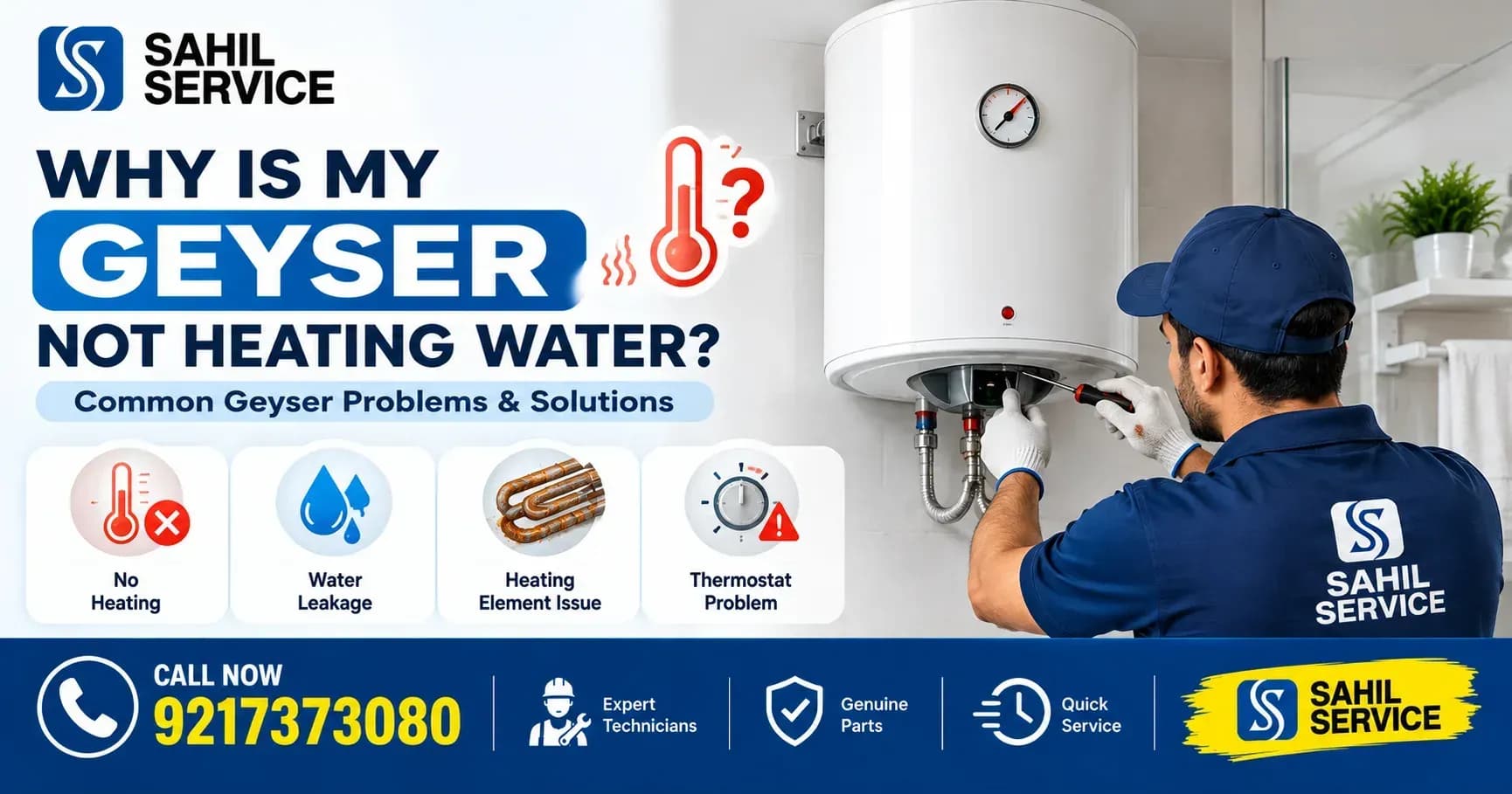
Nothing ruins a winter morning quite like stepping into the shower, turning the tap, and being greeted by an icy blast of cold water. When a geyser is working fine, you barely give it a second thought. You flip the switch, make a quick cup of tea, and expect steamy water ready to go. But the moment it fails, your entire morning routine grinds to a halt.
If your geyser is blowing cold air, taking forever to warm up, or refusing to turn on at all, you don't necessarily need to start shopping for a brand-new appliance. Water heaters are workhorses, but they rely on a delicate balance of electrical components and clean water flow. Depending on what you're experiencing, the fix might be far simpler—or at least more straightforward—than you think.
Here is a breakdown of what is likely going wrong behind the scenes and what you can do about it.
Why is my geyser not heating water?
If you’ve turned the geyser on, waited half an hour, and the water is still as cold as when it came out of the main line, the unit has lost its ability to generate heat entirely.
Most often, this points to a burnt-out heating element. Think of the element like the wire in an old lightbulb; over time, intense daily heating cycles cause it to snap or short. Another common culprit is a failed thermostat, which fails to signal the element that the water is cold.
Before you call in a technician, do a quick external sanity check:
- Look at the power indicator on the geyser's outer shell. Is it glowing?
- Head over to your main electrical panel and check the dedicated Miniature Circuit Breaker (MCB). Has it tripped?
If the MCB keeps tripping every single time you switch the geyser on, stop resetting it. That repeated flip is a safety feature warning you about a short circuit inside the appliance. Water and high-voltage electricity aren't something to play around with, so leave the switch off and get a professional to trace the electrical line.
Why is my geyser heating water slowly?
If your morning shower used to be ready in fifteen minutes but now takes nearly an hour, your geyser is fighting against an internal roadblock.
The primary culprit here is hard water scale buildup. Over months and years, minerals like calcium and magnesium naturally settle out of the heated water and form a crusty, rock-like layer around the heating element. Instead of heating the water directly, the element now has to blast heat through a thick blanket of stone first. It consumes far more electricity and slows down the process dramatically.
Other reasons for sluggish heating include:
- A heating element that is partially damaged or failing
- A drifting thermostat calibration
- Heavy sediment sitting at the bottom of the tank
- Fluctuations in incoming household voltage
If you've noticed a slow, gradual decline in heating speed over several months, a thorough tank flush and descaling service will usually bring it right back to life.
Why is my geyser water not hot enough?
It’s one thing for a geyser to take its time, but it’s another when the tap peaks at a disappointing "slightly warm" no matter how long you leave it on.
When water refuses to hit a proper high temperature, start with the thermostat. Thermostats control the auto-cut feature; if yours is malfunctioning or physically knocked out of its ideal setting, it may tell the system to shut off long before the water reaches a comfortable 50∘C–60∘C.
However, the geyser isn't always to blame. Sometimes, cold water from another line leaks into the hot water pipe through a faulty mixing valve or a defective dual-tap system in your bathroom. You end up with lukewarm water at the shower head even though the water inside the geyser tank is scalding hot. A good technician will feel the pipe directly underneath the geyser to verify if the hot water is actually leaving the tank before blame is assigned to the appliance itself.
Why does my geyser take so long to heat?
When a geyser takes an absurd amount of time to heat up, you are almost always dealing with a thermal efficiency drop.
As mentioned above, thick layers of lime scale insulate the heating element from the surrounding water. But incoming water temperature also plays a massive role that many people forget. In the deep winter, water coming from underground sumps or overhead tanks is significantly colder than in autumn. The geyser simply has a much wider temperature gap to bridge.
That said, if your unit’s heating time suddenly doubles from one week to the next without a massive cold wave hitting your area, scale accumulation or a failing internal wire is likely choking the power transfer.
Why is my geyser giving lukewarm water?
Lukewarm water is particularly annoying because it proves the unit isn't completely dead—it’s just struggling.
When you're stuck in lukewarm territory, the issue usually falls into one of these buckets:
- Mineral scale insulation: Heat is trapped inside the element casing and not dispersing through the tank efficiently.
- Partial element failure: Dual-coil elements might have lost one side of their circuit, running at half power.
- Faulty mixing valves: Cold water is bleeding into your hot water pipe line downstream.
- Corroded dip tubes: The internal tube that directs cold incoming water to the bottom of the tank breaks off, causing fresh cold water to mix immediately with the hot water sitting at the top.
A brief inspection by a plumber or repair tech can quickly narrow down whether the issue is inside the metal tank or hidden inside your bathroom wall plumbing.
Why does my geyser stop heating after a few minutes?
You switch on the geyser, see the red light pop on, hear that subtle hum, and five minutes later... dead silence. You check the water, and it's barely tepid.
This early-cutoff behavior points straight to your temperature control and safety switch assembly. Geysers use two layers of protection: a standard operational thermostat and a high-limit thermal cut-out switch.
The Thermostat: If the thermostat sensor is coated in scale, it can overheat locally, tricking the sensor into thinking the entire tank is boiling hot when only a tiny layer around the element is heated. It cuts power way too early.
The Thermal Cut-out: If the primary thermostat fails to shut off, the emergency safety switch trips to prevent the tank from bursting.
If your geyser repeatedly cuts off after a brief burst, flipping the reset switch over and over won't solve the underlying heat distribution issue. It needs a proper component check.
How long does a geyser take to heat water?
There isn't a single universal number because every household setup is different.
An instant geyser (3–6 liters) with a powerful 3000W element will deliver hot water in under two minutes, though in continuous small streams. On the other hand, a large 25L storage geyser can easily take 15 to 20 minutes to heat its entire reservoir from scratch under normal conditions.
Key variables that dictate heating speed:
- Tank capacity: Larger volumes take exponentially longer to reach uniform temperature.
- Wattage rating: A 2000W element heats slower than a 3000W element.
- Base water temperature: Ambient water temperature entering the inlet line.
- Scale buildup: Clean elements heat faster than scaled ones.
If your geyser has always taken 20 minutes to heat up, that’s just its baseline. It's the sudden changes in that timeline you need to watch out for.
Why does my geyser heat less water than before?
If you used to get enough hot water for two back-to-back showers, but now the second person is stuck rinsing off in ice water, your usable hot water capacity has shrunk.
This happens when sediment fills the bottom of the tank. Over years, sand, rust, and mineral flakes settle at the bottom, taking up physical volume where hot water should sit. A 25-liter tank choked with sediment might only hold 15 liters of actual water.
Alternatively, if your thermostat cut-out is firing prematurely, the water in the tank never hits its full 60∘C potential. When you mix it with cold water at the tap, you burn through the hot water volume much faster than usual.
Why is my geyser working but there is no hot water?
It’s confusing to see the indicator light glowing bright on the front panel while the tap delivers ice-cold water.
Don't let that small light fool you. In most geysers, the indicator bulb is wired directly to the incoming power terminal or the primary thermostat output—not the heating element itself. The light simply tells you that electricity is reaching the unit.
If the heating element inside has burned out, snapped, or severed its terminal connection, power will enter the geyser, light up the panel, and go absolutely nowhere. It’s the appliance equivalent of a car dashboard turning on when the engine starter is dead.
Why does my geyser suddenly stop heating?
When a geyser worked perfectly yesterday and refuses to give a single drop of warm water today, you are looking at a sudden electrical failure or safety trip.
Common triggers for a sudden shutdown include:
- A tripped household MCB due to a voltage spike
- A blown internal thermal fuse or tripped high-limit safety cut-out
- A completely burned-out heating element
- A loose, charred wire connection inside the terminal box
Safety Note: Water heaters combine high voltage and water inside a pressurized metal shell. If your geyser causes your home's breaker to trip, do not force it back on repeatedly. Call a qualified professional to inspect the wiring and components before turning power back on.
When Should You Get Your Geyser Checked?
You don't need to wait for a complete system collapse to get your water heater looked at. In fact, catching minor issues early saves you money on electricity and prevents total component meltdowns.
Keep an eye out for these clear warning signs:
- Water temperature is noticeably lower than usual
- Heating takes twice as long as it used to
- You hear strange popping, cracking, or humming sounds coming from the tank
- The external casing or pipe connections show visible water drips
- Your main electrical switch or MCB trips whenever the geyser turns on
- The tap water comes out rusty, cloudy, or with a faint metallic odor
Geyser Service and Repair in Delhi
If you're dealing with a stubborn geyser that refuses to warm up, takes hours to heat, or keeps tripping your breaker, Sahil Service offers prompt geyser service and repair across Delhi and nearby areas.
Instead of dragging a heavy appliance across town to a workshop, a technician comes straight to your doorstep, inspects the unit, diagnoses the exact root cause, and explains what needs fixing before any work starts.
Sahil Service handles all major geyser issues, including:
- Complete heating failure diagnosis
- Heating element testing and replacement
- Thermostat calibration and replacement
- Electrical short circuit and wiring repairs
- Tank descaling and sediment flushing
- Pipe leakage and valve repairs
- General annual servicing and safety checks
Get Professional Geyser Service
Final Thoughts
A cold shower doesn't automatically mean you need to spend thousands on a brand-new geyser. More often than not, the issue comes down to a worn-out element, a misbehaving thermostat, or a heavy layer of scale buildup that simply needs to be cleaned out.
The key is identifying the actual problem before you start swapping out random parts. If your geyser isn't performing like it used to, get it inspected by someone who knows what to look for.
For reliable home geyser repair and servicing in Delhi and neighboring regions, reach out to Sahil Service to schedule a professional technician visit right at your door.