Why Is My Geyser Leaking Water? Common Causes, Safety & Repair Guide
Geyser leaking water? Learn why geysers leak from the bottom, safety valve or tank and when repair is needed. Get geyser repair in Delhi
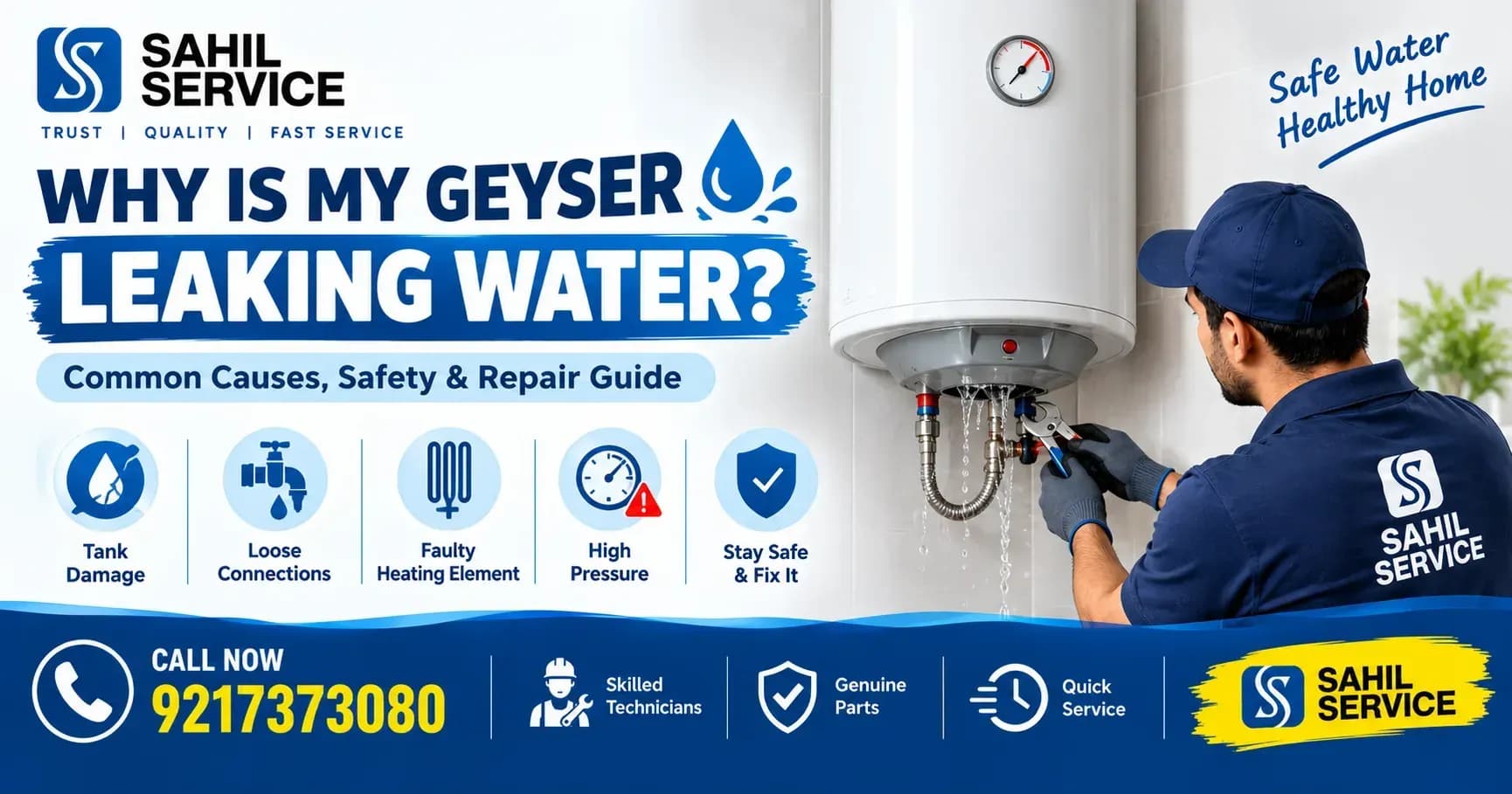
Water and high voltage are two things you never want mixing in your bathroom, which is why seeing a puddle underneath your geyser instantly triggers a bit of panic. It usually starts small—a tiny, rhythmic drip... drip... drip onto the tile floor that you promise yourself you'll look into later. But within a few days, that minor drop can easily turn into a steady stream or a ruined wall.
Before you start pricing out a brand-new water heater, take a breath. A leak doesn't automatically mean your geyser is trash. Water behaves strangely under pressure; it can seep out of a simple rubber washer at the top, run down the side of the metal casing, and collect at the bottom, making it look like the whole tank has ruptured.
Understanding where that moisture is coming from is the difference between a simple, 10-minute wrench fix and needing a full appliance replacement. Here is how to figure out what your geyser is trying to tell you—and what you need to do next.
Why is my geyser leaking water?
When a geyser starts losing water, the root cause almost always boils down to one of two categories: a failed connection/valve on the outside, or structural breakdown on the inside.
Here are the most common culprits behind the moisture:
- Loose flex pipes: The inlet (cold) and outlet (hot) braided hoses expand and contract constantly with temperature changes, which can loosen the threaded joints over time.
- Degraded seals and gaskets: The rubber or silicone O-rings cushioning the heating element assembly or pipe connections dry out, crack, and snap.
- Pressure relief valve activity: The safety valve doing its job (or failing at it) by venting excess steam and water.
- Heating element flange leaks: Water escaping from the mounting plate where the heating coil enters the tank.
- Internal tank corrosion: Hard water minerals eating through the inner steel liner until a pinhole forms.
The first step is always diagnosis. Wiping away the water with a towel, standing there with a torch for two minutes, and watching where the first fresh droplet forms will save you a world of guesswork.
Why is water dripping from my geyser?
Where those drops are landing tells you almost everything you need to know about the severity of the issue.
If you see water trickling down from the top braided hoses, you're likely in luck—that’s usually just a worn-out rubber washer inside the coupling nut or a bit of old Teflon tape giving up the ghost. If it's dripping from the small plastic or brass spout sticking out of the side, your pressure valve is active.
However, if water is weeping through the plastic bottom cover where the indicator lights and thermostat dials live, that requires immediate attention. Water trickling through electrical housing isn't just a plumbing problem; it's a direct shock and short-circuit hazard. Turn off the power switch immediately and stop using the unit until it’s looked at.
Why is my geyser leaking from the bottom?
Finding water pooling directly at the base of the unit is notoriously misleading. Because gravity pulls everything downward, almost every geyser leak eventually looks like a bottom leak.
Before assuming the worst, trace the water path. Moisture can easily originate from:
- A leaking safety valve higher up on the inlet line, running down the outer shell.
- Condensation buildup on cold inlet pipes during humid or extremely cold days.
- A perished gasket around the heating element plate (which mounts near the bottom of most vertical geysers).
- A loose drain plug used during regular servicing.
The red flag: If you wipe the entire outer shell bone-dry, turn off the water supply, and watch fresh water continuously seep out through the bottom metal seam or outer plastic casing, the inner storage tank itself has likely rusted through. Because inner tanks are pressurized vessels, a corroded, leaking tank body cannot be patched with epoxy, sealant, or tape. Once the core tank wall goes, the geyser has reached the end of its lifespan.
Why is water coming from the geyser safety valve?
The safety valve (often called the Pressure Relief Valve or PRV) is your geyser's built-in escape hatch. Water expands as it heats up. If the pressure inside the tank builds up too high, this spring-loaded valve opens slightly to bleed off a bit of water and relieve the strain on the internal welds.
A few drops falling from the valve while the geyser is actively heating a full tank of cold water is completely normal. It means the safety feature is actually doing its job.
However, if the valve is discharging a steady, continuous stream—or if it drips constantly even when the geyser has been switched off for hours—you have a problem. This usually points to exceptionally high municipal water pressure forcing the spring open, sediment trapped inside the valve seat preventing it from closing flush, or an internal spring that has simply worn out.
Crucial Warning: Never cap, plug, tie off, or block the outlet of a leaking safety valve to stop the dripping. Blocking this valve turns your pressurized water heater into a potential pressure-bomb. If it’s leaking constantly, replace the valve—don't seal it shut.
Can a leaking geyser be repaired?
In many cases, yes! You don't always need to spend money replacing the entire appliance.
What CAN be easily repaired:
- Leaking hose connections: Replacing thread tape or installing new rubber washers.
- Faulty safety valves: Unscrewing the old PRV and threading on a fresh, factory-calibrated one.
- Heating element gasket leaks: Draining the tank, pulling out the heating element plate, swapping the cheap rubber gasket, and bolting it back tight.
- High line pressure: Installing a pressure-reducing valve (PRV) on your main bathroom inlet line.
What CANNOT be safely repaired:
- A rusted-through inner storage tank. Once the internal enamel or glass coating cracks and the steel behind it develops a pinhole leak, patching it is a temporary, dangerous band-aid. The tank will inevitably burst under normal operating pressure.
Is a leaking geyser dangerous?
Yes, a leaking geyser carries real risks if left unchecked—primarily due to electricity and structural moisture.
Water dripping anywhere near the internal wiring terminal, thermostat, or heating element posts can cause an immediate electrical short. Best case scenario, it repeatedly trips your home's MCB or RCCB breaker. Worst case scenario, it turns the standing water on your bathroom floor into an electrical conductor or causes internal charring.
Beyond the immediate shock hazard, a slow, undetected leak behind a false ceiling or mounted high on a wall can rot mounting brackets, loosen wall plugs, and ruin paintwork or drywall. If your geyser ever starts leaking near the electrical cover, cut the power at the main breaker before you touch the tap or the metal body.
Why is my geyser pressure valve leaking?
If you've pinpointed the leak strictly to the pressure valve, a few specific issues are likely at play:
- Thermal Expansion: As water goes from cold to 60∘C, it expands in volume. Without an expansion vessel in the line, that extra volume forces its way out through the valve spring.
- Debris in the Mechanism: Hard water scale, rust flakes, or grit from dirty supply pipes can get stuck right under the rubber seal of the valve, leaving a tiny gap where water constantly trickles through.
- Failing Thermostat: If your thermostat fails to auto-cut when the water hits its target temperature, the water will keep heating until it boils. The resulting steam creates immense pressure, forcing the valve wide open to prevent an explosion.
- Excessive Building Pressure: If you live on the lower floors of a multi-story apartment building, the sheer head pressure of the water column from the roof tank can exceed the pressure rating of the valve.
What causes geyser tank leakage?
When an internal tank fails, it’s rarely a random event—it’s usually the result of years of unseen chemical and physical stress.
- Hard Water Mineral Attack: Calcium and magnesium deposits settle at the bottom of the tank. Over time, these minerals create localized hotspots that degrade the protective inner coating, allowing raw water to meet raw steel.
- Galvanic Corrosion: Water causes a natural electrochemical reaction inside metal tanks. Most quality geysers use a sacrificial Magnesium Anode Rod to absorb this corrosion. Once that rod completely dissolves (usually after 2–3 years), the water starts attacking the steel tank walls instead.
- Excessive System Pressure: Constant pressure spikes weaken the welded seams at the top and bottom dish of the inner tank until a micro-crack develops.
What Should You Do If Your Geyser Starts Leaking?
If you walk into the bathroom and find water pooling under the geyser, don't panic. Just follow these steps in order:
- Safety First (Cut Power): Walk over to the switchboard or main panel and flip OFF the dedicated switch or MCB for the geyser. Do not touch the wet appliance body while it's live.
- Shut off Water: Turn the small isolation valve on the cold water inlet pipe clockwise to stop fresh water from entering the tank and feeding the leak.
- Locate the Droplets: Dry the outside of the unit thoroughly with a cloth. Watch closely for a minute to see if water is seeping from a pipe nut, the side safety valve, or directly out of the bottom plastic casing.
- Drain the Stored Hot Water: Open the hot water tap on your sink or shower to release built-in pressure and drain remaining hot water safely.
- Call for an Inspection: Unless it's a simple external hose nut you can tighten yourself with an adjustable wrench, leave the internal component checks to a technician.
Geyser Repair and Service in Delhi
Dealing with a dripping geyser, a stubborn safety valve, or suspecting an internal tank fault? Sahil Service provides fast, reliable, doorstep geyser repair and maintenance across Delhi and surrounding regions.
Rather than making wild guesses or pushing you into an expensive replacement right away, a trained technician visits your home, accurately diagnoses where the water is escaping, and gives you a clear breakdown of your options.
Sahil Service handles all types of leakages and geyser issues:
- Threaded pipe joint and connector leak repairs
- Safety valve and pressure valve replacements
- Heating element gasket and seal replacements
- Complete tank descaling and flush-outs
- Sacrificial anode rod replacements
- Electrical short circuit & thermostat repairs
- Comprehensive safety and performance checks
Final Thoughts
A puddle under your geyser is a warning light you shouldn't ignore, but it doesn't always signal financial doom. A simple 500–800 component repair like swapping a hardened gasket or replacing a crusty pressure valve is often all it takes to get your hot showers back on track.
The golden rule is simple: never block a safety valve, never touch a wet live unit, and trace the water source before making a decision.
If your geyser is showing signs of leakage anywhere in Delhi or nearby areas, reach out to Sahil Service to book a hassle-free, professional home inspection today.