What Is the Best AC Temperature to Save Electricity
What is the best AC temperature to save electricity? Find the ideal AC setting for efficient cooling, lower energy usage, and reduced electricity bills. Book Now
How to Set Your AC Temperature to Save Electricity
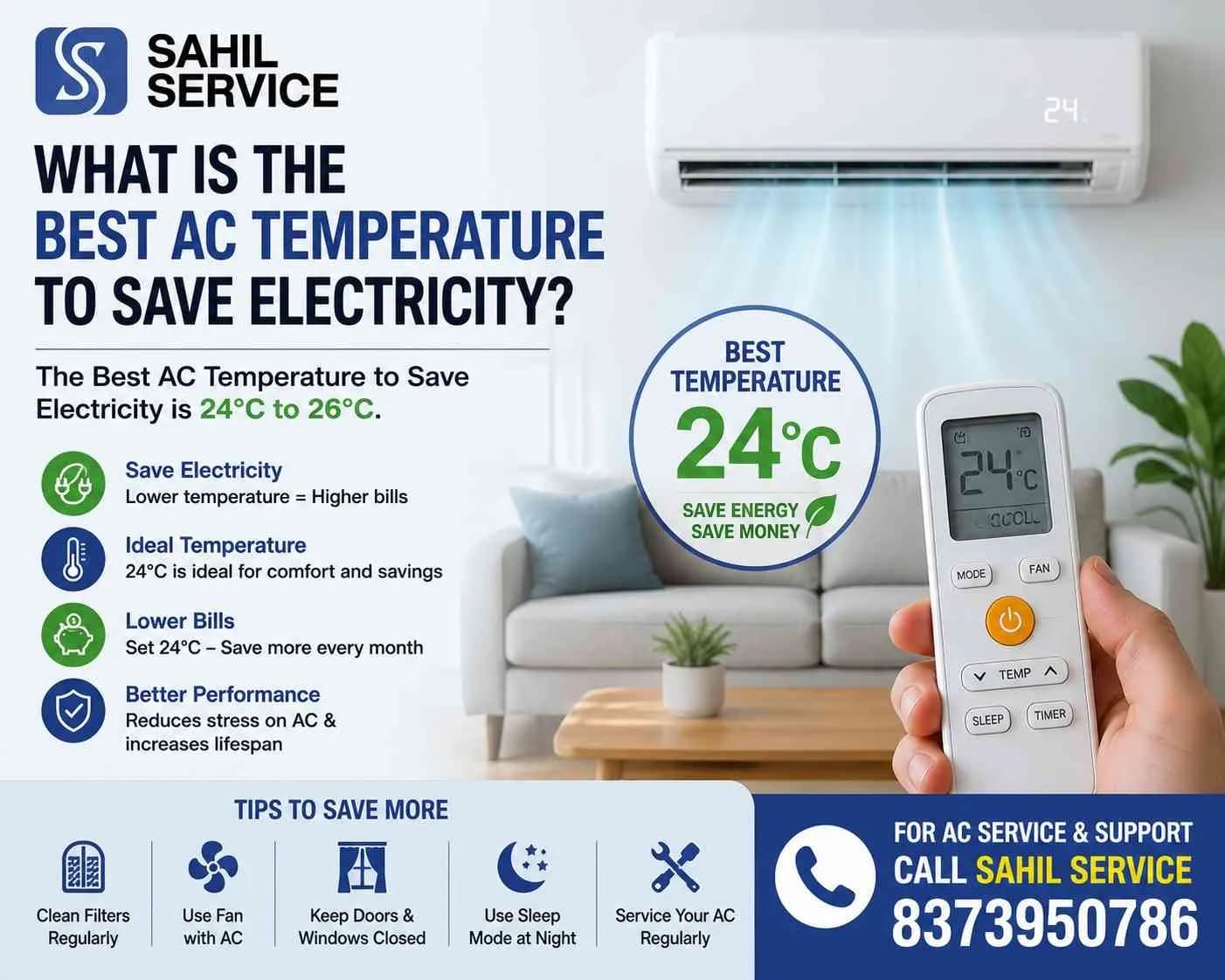
The best AC temperature to save electricity is generally around 24°C to 26°C. For everyday cooling, 24°C–25°C is a practical starting point, while 25°C–26°C can be suitable at night. The ideal setting depends on outdoor temperature, room conditions, AC efficiency and personal comfort.
Setting the AC extremely low, such as 16°C or 18°C, does not necessarily cool the room faster. A lower temperature can increase the cooling demand and electricity consumption.
In this guide, you will learn the best AC temperature for summer, night-time cooling, inverter ACs, and practical ways to reduce AC electricity consumption.
What Temperature Should I Set My AC?
| Situation | Recommended Temperature |
| Daily cooling | 24°C–25°C |
| Night / Sleep | 25°C–26°C |
| Energy-saving focus | 25°C–26°C |
| Very hot weather | 24°C–25°C |
Simple answer: Start around 24°C–26°C and adjust the temperature according to your comfort and room conditions.
What Is the Ideal AC Temperature to Save Electricity?
A moderate thermostat setting can help balance cooling comfort and electricity consumption. For many homes, 24°C–26°C is a practical range for regular AC use.
Instead of setting the AC to the lowest available temperature, choose a comfortable temperature and allow the AC to maintain it.
The right temperature can also depend on:
- Outdoor temperature
- Room size
- Number of people in the room
- Insulation and sunlight
- AC capacity
- Inverter or non-inverter technology
- AC maintenance condition
24°C vs 26°C: Which AC Temperature Saves More Electricity?
Both settings can be useful, but they provide a different balance between cooling and energy use.
AC at 24°C
24°C can provide stronger cooling and may be suitable during very hot weather or when you prefer a cooler room.
AC at 26°C
26°C reduces the cooling target and can be a better choice when your main priority is reducing cooling demand while remaining comfortable.
Which One Should You Choose?
For most users, 24°C–26°C is a practical range.
If the room feels comfortable at 26°C, there may be no need to lower the setting. If the weather is extremely hot, 24°C–25°C may provide more comfortable cooling.
What Is the Best AC Temperature in Summer?
During hot summer days, start your AC around 24°C–25°C and adjust it according to room comfort.
Keep doors and windows closed while the AC is running and reduce direct sunlight entering the room. These steps can help the AC maintain the desired temperature more efficiently.
What Is the Best AC Temperature at Night?
For night-time use, 25°C–26°C can be a comfortable starting range for many people.
You can also use Sleep Mode if your AC supports it. A ceiling fan can help circulate cool air around the room, allowing you to maintain comfort without setting the AC unnecessarily low.
What Is the Best Temperature for an Inverter AC?
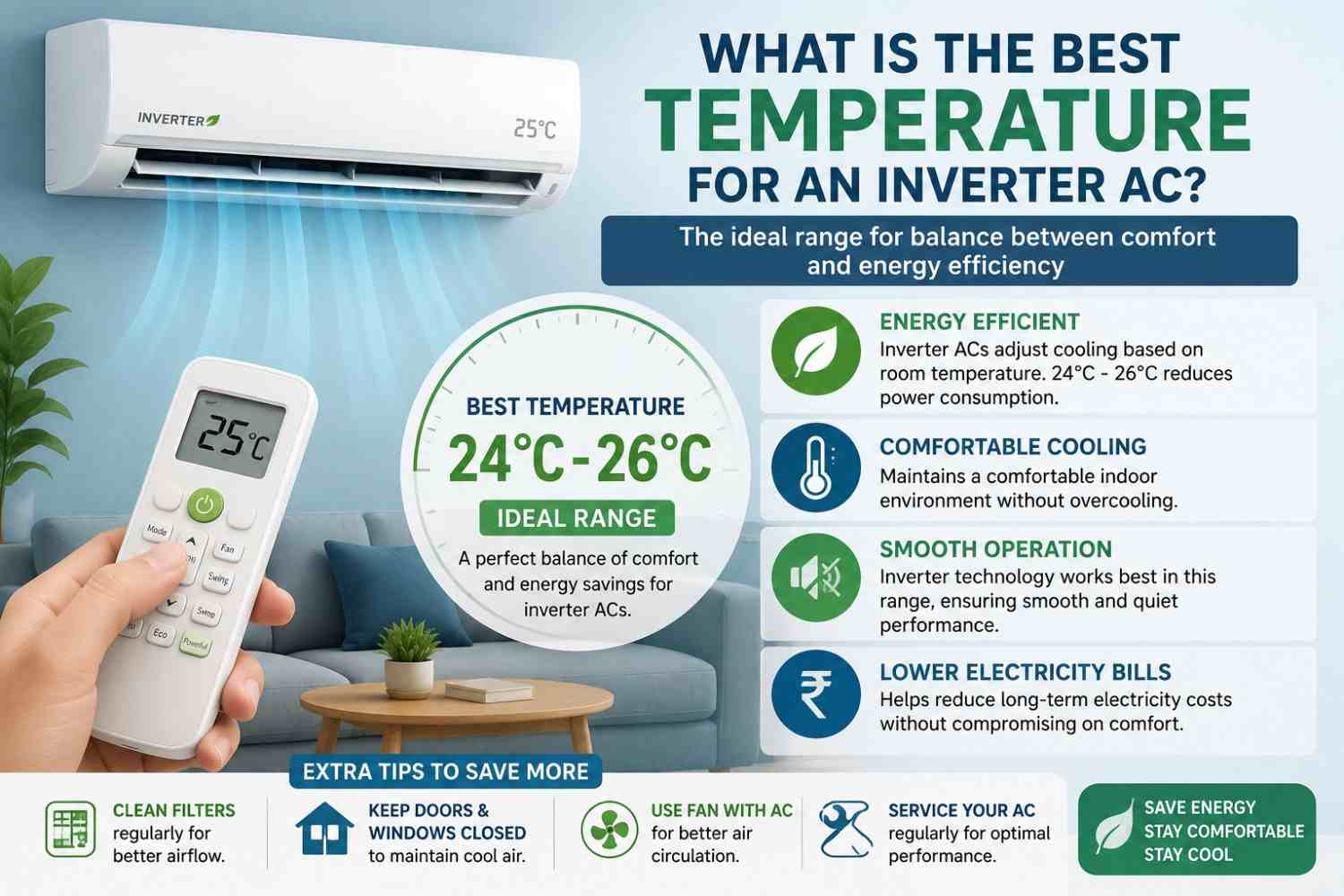
For an inverter AC, 24°C–26°C is a practical starting range for balancing comfort and energy efficiency.
Inverter ACs can adjust compressor operation according to cooling demand, but actual electricity consumption depends on the AC model, room conditions, outdoor temperature, insulation, usage and temperature setting.
A lower temperature is not automatically more efficient just because the AC is an inverter model.
Does Setting AC to 16°C Cool the Room Fast?
No. Setting the AC to 16°C does not automatically make the room cool faster.
The thermostat setting determines the target temperature the AC is trying to maintain. Setting a much low target can make the AC continue cooling for longer and may increase electricity consumption.
Instead of using 16°C or 18°C, choose a comfortable temperature such as 24°C–26°C and allow the AC to maintain it.
How Does AC Temperature Affect Electricity Consumption?
The lower the desired room temperature compared with the outdoor conditions, the more cooling the AC may need to provide.
Electricity consumption is affected by several factors,
Including:
AC Temperature Setting: The temperature you set on your AC.
Outdoor Temperature: How hot or cool it is outside.
Room Size: The size of the room where the AC is used.
AC Capacity: The cooling power of your AC, such as 1 Ton, 1.5 Ton, or 2 Ton.
Inverter Technology: Inverter ACs adjust their cooling speed and can help save electricity.
Insulation: Good insulation keeps cool air inside the room.
Filter and Coil Cleanliness: Clean filters and coils help the AC cool properly and use less electricity.
Hours of Operation: The longer you run the AC, the more electricity it may use.
Therefore, there is no single electricity-saving percentage that applies to every AC and every home.
How to Reduce AC Electricity Consumption
Changing the temperature is only one part of reducing AC power consumption.
1. Keep the AC Around 24°C–26°C
Avoid unnecessarily low temperature settings. Start within this range and adjust according to comfort.
2. Clean AC Filters Regularly
Dirty filters can restrict airflow and reduce cooling efficiency. Clean the accessible filters regularly according to the AC manufacturer's instructions.
3. Keep Doors and Windows Closed
Hot outside air can increase the cooling load. Keep the room closed while the AC is operating.
4. Reduce Direct Sunlight
Use curtains or blinds during strong sunlight to reduce heat entering the room.
5. Use Sleep Mode at Night
If available, Sleep Mode can adjust operation during the night and may help avoid unnecessary cooling.
6. Use a Ceiling Fan for Air Circulation
A ceiling fan can help distribute cool air around the room and improve comfort.
7. Keep the Outdoor Unit Clear
Make sure the outdoor unit has sufficient airflow and is not blocked by objects.
8. Service the AC When Cooling Efficiency Drops
If the AC takes unusually long to cool, has weak airflow or consumes more electricity than usual, Proper inspection may be useful.
What If Your AC Is Not Cooling?
If your AC is not cooling properly even at a normal temperature setting, simply lowering the thermostat may not solve the problem.
Possible causes can include:
- Dirty filters
- Restricted air Circulation
- Dirty condenser coil
- Refrigerant-related problems
- Thermostat or sensor issues
- Fan problems
- Other component Problem
If the problem continues, Best AC inspection and service can help identify the actual cause.
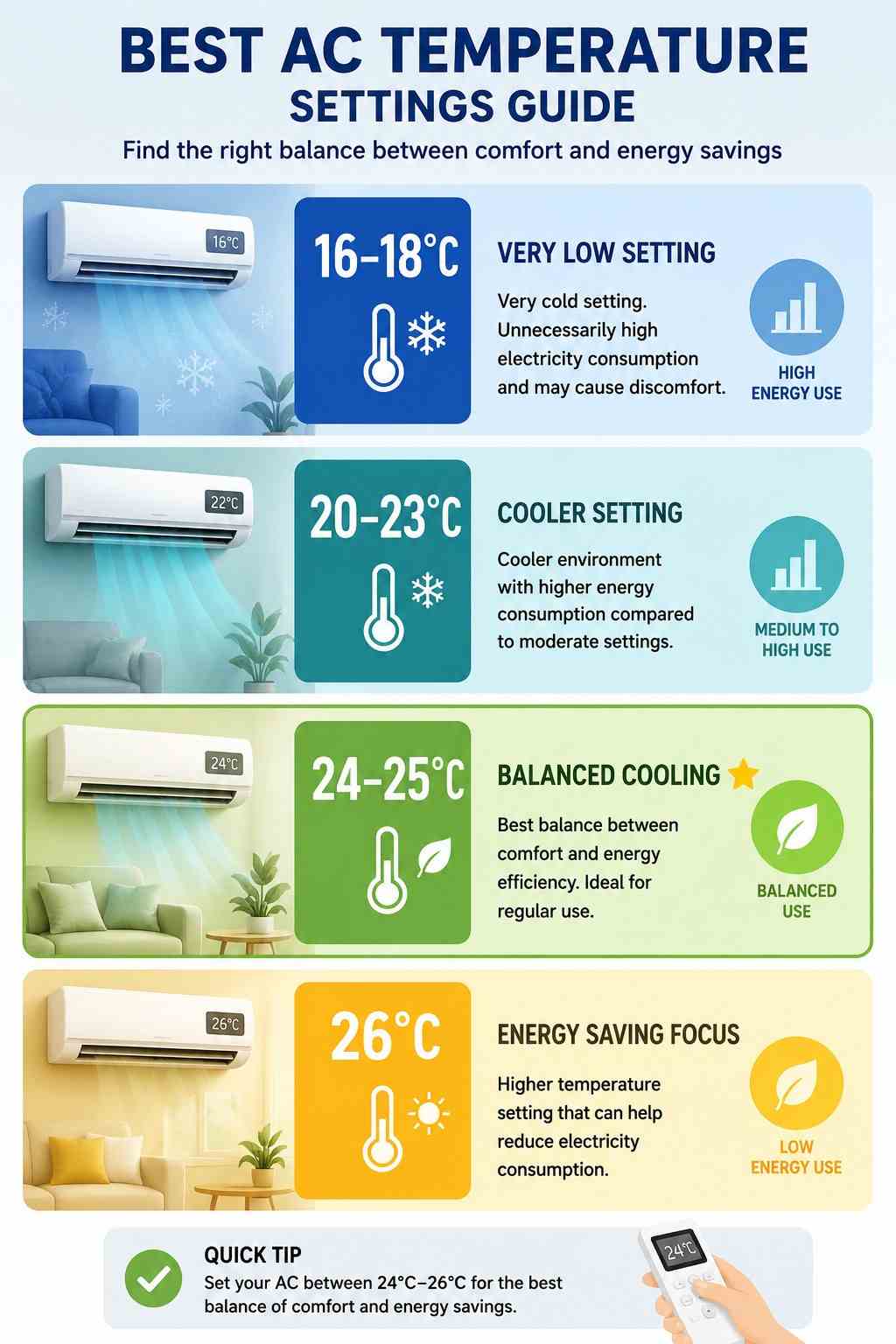
Best AC Temperature: Quick Comparison
| Temperature | General Use |
| 16°C–18°C | Very low setting; usually unnecessary |
| 20°C–23°C | Cooler setting; potentially higher cooling demand |
| 24°C | Good balance for regular cooling |
| 25°C | Balanced comfort and efficiency |
| 26°C | Useful when prioritizing energy savings |
The best temperature is ultimately the lowest setting that provides comfortable cooling without unnecessary energy use.
Frequently Asked Questions
Q1. What is the best AC temperature to save electricity?
Ans- 24°C–26°C is a practical range for many homes. Start around 24°C–25°C for regular cooling and consider 25°C–26°C at night if comfortable.
Q2. Is 24°C better than 26°C for AC?
Ans- 24°C provides a cooler target, while 26°C generally requires less cooling. Choose the setting that provides comfortable cooling for your room.
Q3. Does setting AC to 16°C save electricity?
Ans- No. A very low temperature setting can increase cooling demand and electricity consumption compared with a moderate setting.
Q4. What temperature should AC be set to in summer?
Ans- 24°C–25°C is a practical starting range during hot weather. Adjust according to outdoor conditions and personal comfort.
Q5. What is the best AC temperature at night?
Ans- 25°C–26°C can be a comfortable starting range at night, especially when combined with Sleep Mode if your AC supports it.
Q6. What is the best temperature for an inverter AC?
Ans- 24°C–26°C is a practical starting range for an inverter AC. Actual energy use depends on the model, room conditions, temperature setting and usage.
Q7. How can I reduce my AC electricity bill?
Ans- Use a moderate temperature, clean filters regularly, keep doors and windows closed, reduce direct sunlight, maintain the outdoor unit and service the AC when cooling efficiency decreases.
Do You Need AC Service or Repair?
If your AC is consuming more electricity than usual, taking too long to cool or not maintaining the selected temperature, the issue may not be the thermostat setting alone.
Sahil Service provides AC repair Service, installation, gas charging and AC cleaning services for homes and offices across Delhi NCR.
If your AC is not cooling efficiently, Expert inspection can help identify the actual problem and restore proper performance.
Book Sahil Repair Service Today
For easy Booking call on 9217373080 or Download The Sahil Service App.
Frequently Asked Questions
Find answers to common questions about this article