Semi Automatic Washing Machine Problems: Common Faults, Repair and Maintenance Guide
Facing semi automatic washing machine problems? Learn common faults, spin dryer issues, pulsator problems, repair tips and maintenance. Contact Sahil Services in Delhi and Faridabad
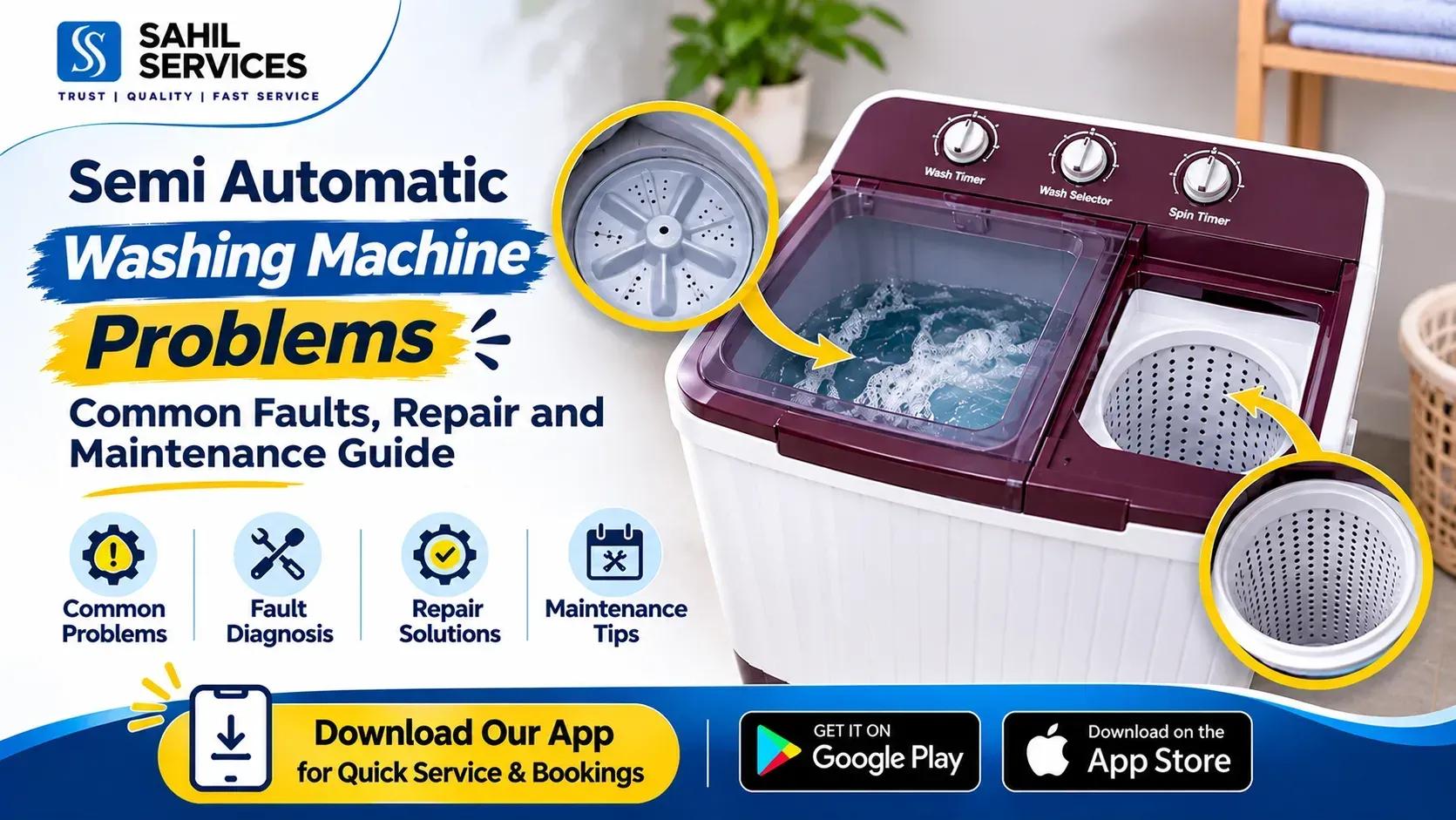
A semi-automatic washing machine makes everyday laundry easier because you can wash clothes in one tub and transfer them to the spin dryer when the washing cycle is complete. It is a practical option for many Indian households, especially where users prefer controlling water filling, washing time and the drying process themselves.
But what happens when the pulsator stops moving, the machine does not drain water, or the spin dryer suddenly stops working?
These problems can be frustrating, particularly when you have a pile of clothes waiting to be washed. Sometimes the issue is minor, such as a loose drain hose or an overloaded spin tub. In other situations, the machine may need professional inspection and repair.
Understanding common semi-automatic washing machine problems can help you identify what might be wrong and when to contact a technician.
In this guide, we will explain common semi-automatic washing machine faults, their possible causes, repair options, maintenance tips and when professional servicing is required.
If your washing machine is not working properly, Sahil Services offers washing machine repair assistance in Delhi, Faridabad and selected Delhi NCR locations, subject to service availability.
How Does a Semi-Automatic Washing Machine Work?
Before discussing common problems, it helps to understand how a semi-automatic washing machine operates.
Unlike a fully automatic washing machine, a semi-automatic model generally has two separate tubs:
- Wash tub: Used for washing clothes with water and detergent.
- Spin tub: Used to remove excess water from clothes after washing.
You generally need to fill the wash tub with water, add detergent, select the washing time and transfer the clothes to the spin tub manually.
The machine uses several components to perform these operations, including:
- Wash motor
- Spin motor
- Pulsator
- Drain valve or drain system
- Water inlet arrangement
- Timer
- Spin tub
- Belt and electrical wiring
- Safety switch or lid mechanism, depending on the model
A problem with any of these components can affect the machine's performance.
12 Common Semi-Automatic Washing Machine Problems
Semi-automatic washing machines are relatively straightforward to operate, but they can still develop mechanical and electrical faults over time.
Here are some common problems, their possible causes and what they may indicate.
1. Washing Machine Pulsator Not Working
The pulsator is the rotating disc located at the bottom of the wash tub. It moves water and clothes to create the washing action.
If the pulsator stops moving, clothes may not get cleaned properly.
Common symptoms:
- Pulsator does not rotate.
- Clothes remain dirty after washing.
- Motor makes a humming noise.
- Pulsator moves slowly or irregularly.
- Washing performance becomes weaker.
Possible causes:
- Faulty wash motor.
- Damaged or worn drive belt.
- Loose electrical connections.
- Timer malfunction.
- Foreign objects obstructing the pulsator.
- Damaged pulsator mechanism.
What should you do?
First, switch off the machine and disconnect the power. Check whether clothes are overloaded or an easily accessible obstruction is visible. Do not remove internal covers or attempt electrical repairs.
If the pulsator still does not rotate, a technician should inspect the motor, belt, timer and drive mechanism.
2. Spin Dryer Not Working
One of the most common semi-automatic washing machine complaints is a spin dryer that does not work.
You transfer wet clothes into the spin tub, close the lid and start the spin cycle, but the tub does not rotate.
Common symptoms:
- Spin tub does not rotate.
- Clothes remain soaking wet.
- Spin motor makes noise but the tub does not spin.
- Spin cycle starts and stops unexpectedly.
- The machine vibrates excessively.
Possible causes:
- Spin motor failure.
- Damaged drive belt.
- Faulty spin timer.
- Lid safety switch problem.
- Unevenly distributed clothes.
- Mechanical obstruction.
- Loose or damaged wiring.
What should you do?
Switch off the machine and unplug it before checking the spin tub. Make sure clothes are distributed evenly and the load is within the manufacturer's recommended capacity.
Check whether the spin tub is visibly obstructed and ensure the lid is properly closed.
If the tub still does not rotate, the motor, belt, timer and safety mechanism may need professional inspection.
3. Washing Machine Is Not Draining Water
If water remains inside the wash tub after washing, the drainage system may not be working properly.
This can make it difficult to rinse clothes or prepare the machine for the next wash.
Possible causes:
- Blocked drain hose.
- Damaged drain valve.
- Clogged outlet.
- Kinked or improperly positioned hose.
- Mechanical problem in the drainage mechanism.
Possible solution:
Check the drain hose for visible bends or external blockages. Make sure the hose is positioned according to the manufacturer's instructions.
If water still does not drain, arrange a professional inspection of the drain valve and internal drainage system.
4. Washing Machine Motor Is Making Noise
Unusual sounds from a semi-automatic washing machine should not be ignored.
A humming, grinding or rattling noise may indicate a mechanical or electrical problem.
Possible causes:
- Worn motor components.
- Loose belt.
- Damaged bearings.
- Foreign objects inside the tub.
- Loose internal fittings.
- Motor struggling due to excessive load.
If the machine makes unusual noises, stop using it until the cause is identified. Continuing to operate it may increase the damage.
5. Washing Machine Is Not Starting
You turn the timer knob, but nothing happens. Neither the wash tub nor the spin tub responds.
This can be caused by a problem with the electrical supply or an internal component.
Possible causes:
- Faulty electrical socket.
- Damaged power cable.
- Timer failure.
- Loose internal wiring.
- Motor problem.
- Faulty safety switch.
Check the wall socket and power connection only if it is safe to do so. If the machine still does not start, a technician should inspect its electrical system.
6. Washing Machine Is Vibrating Excessively
Some vibration is normal during spinning, but excessive shaking or movement can indicate a problem.
Common reasons include:
- Unevenly distributed clothes.
- Overloading the spin tub.
- Machine placed on an uneven floor.
- Worn suspension or support components.
- Mechanical imbalance.
- Loose internal parts.
What should you do?
Stop the spin cycle and redistribute the clothes evenly. Make sure the machine is placed on a stable, level surface.
If excessive vibration continues even with a balanced load, arrange a professional inspection.
7. Washing Machine Is Not Washing Clothes Properly
Sometimes the machine runs, but clothes do not come out clean.
You may notice that detergent remains on clothes or dirt is not removed properly.
Possible causes:
- Pulsator not rotating correctly.
- Overloading.
- Incorrect washing time.
- Insufficient water.
- Worn pulsator or drive components.
- Motor performance problems.
Try using an appropriate load size and following the detergent manufacturer's instructions. If washing performance remains poor, the wash motor and pulsator system may need inspection.
8. Washing Machine Timer Is Not Working
The timer controls the duration of the washing or spinning operation.
If the timer is faulty, the machine may stop unexpectedly or fail to start the selected cycle correctly.
Common symptoms:
- Timer knob does not move as expected.
- Wash cycle stops too early.
- Machine continues running beyond the selected time.
- Wash or spin operation does not start.
- Timer behaves inconsistently.
A damaged timer may need testing and repair or replacement by a qualified technician.
9. Washing Machine Is Giving an Electric Shock
An electrical shock from the washing machine is a serious safety warning.
Possible causes include:
- Damaged insulation.
- Faulty internal wiring.
- Improper earthing.
- Electrical leakage.
- Damaged power cable.
- Faulty electrical components.
Important: Stop using the washing machine immediately. Do not touch the appliance with wet hands or attempt to test internal wiring. Arrange inspection by a qualified technician and have the electrical supply and earthing checked by an appropriate electrician.
10. Spin Tub Is Not Stopping Properly
The spin tub should stop after the selected spin operation ends.
If it continues rotating unexpectedly or does not stop normally, the timer, electrical control or braking mechanism may need inspection, depending on the model.
Do not attempt to stop the tub with your hands or any object. Switch off the machine and disconnect the power if it is safe to do so.
11. Water Leakage From the Washing Machine
Water leakage can damage the surrounding floor and may create an electrical safety risk.
Possible causes:
- Loose drain hose connection.
- Cracked hose.
- Damaged tub.
- Faulty drain valve.
- Loose internal connection.
- Excessive water filling.
Identify whether the water is coming from the hose, wash tub or bottom of the appliance without opening the machine.
If leakage is near electrical components, stop using the appliance and arrange professional inspection.
12. Washing Machine Is Making a Burning Smell
A burning smell during washing or spinning should never be ignored.
It may indicate:
- Motor overheating.
- Damaged wiring.
- Electrical short circuit.
- Excessive mechanical friction.
- A belt or other component overheating.
Switch off the machine and disconnect it from the power supply if safe. Do not restart it until a technician has inspected the appliance.
Semi-Automatic Washing Machine Problems and Possible Solutions
The following table provides a quick reference for common issues.
| Washing Machine Problem | Possible Cause | Recommended Action |
|---|---|---|
| Pulsator not rotating | Motor, belt or timer problem | Professional inspection |
| Spin dryer not working | Spin motor, belt or lid switch | Check load and arrange diagnosis |
| Water not draining | Blocked hose or drain valve | Check accessible hose |
| Machine not starting | Power supply, wiring or timer | Check safe external connections |
| Excessive vibration | Uneven load or mechanical issue | Redistribute clothes |
| Poor washing performance | Pulsator or motor issue | Check load and washing settings |
| Unusual motor noise | Mechanical or motor fault | Stop and inspect |
| Timer not working | Faulty timer | Technician diagnosis |
| Water leakage | Hose, valve or tub damage | Stop use if near electrical parts |
| Burning smell | Overheating or electrical fault | Disconnect power and seek repair |
Remember that these are possible causes, not confirmed diagnoses. The same symptom can be produced by different faults depending on the washing machine model.
Semi-Automatic Washing Machine Repair: Which Parts May Need Attention?
When a semi-automatic washing machine develops a problem, the technician may need to inspect one or more components.
1. Wash Motor
The wash motor powers the pulsator. If it fails, the machine may not wash clothes properly.
2. Spin Motor
The spin motor rotates the spin tub to remove excess water from clothes. A damaged motor can cause the spin dryer to stop working.
3. Pulsator
The pulsator creates the movement required for washing. A damaged or obstructed pulsator can reduce washing performance.
4. Timer
The timer controls the duration of washing and spinning operations. A faulty timer may interrupt the selected cycle.
5. Drive Belt
Some semi-automatic washing machines use belts to transfer motor power to the washing or spinning mechanism. A worn or broken belt can prevent the tub or pulsator from rotating.
6. Drain Valve and Hose
The drainage system removes used water from the wash tub. A blocked hose or damaged valve can prevent proper drainage.
7. Lid Safety Switch
Some models use a safety switch to prevent spinning when the lid is open. A faulty switch can prevent the spin cycle from operating.
The technician should identify the actual fault before recommending replacement of any part.
Semi-Automatic Washing Machine Repair Cost in India
One common question is: How much does semi-automatic washing machine repair cost?
There is no single repair price for every semi-automatic washing machine. The final cost depends on the brand, model, faulty component, availability of spare parts and labour involved.
For example, a simple drainage issue may require less work than replacing a damaged motor.
Factors That Affect Repair Cost
1. Type of Problem
The repair cost depends on whether the problem involves the pulsator, motor, timer, belt, drainage system or electrical wiring.
2. Washing Machine Brand and Model
Different brands use different components. Spare-part availability and compatibility can affect the final cost.
3. Repair or Replacement
Some components can be repaired, while others may need replacement depending on their condition.
4. Spare-Part Availability
Older models may require additional effort to find compatible parts.
5. Labour and Inspection
The technician may need to inspect the machine, identify the fault, test components and complete the repair.
Before approving the repair, ask for a clear estimate covering inspection, labour and any replacement parts.
Semi-Automatic Washing Machine Maintenance Tips
A little regular maintenance can help keep your washing machine in good working condition.
Here are some simple habits worth following.
1. Avoid Overloading the Wash Tub
Putting too many clothes into the wash tub can affect washing performance and put extra strain on the motor.
Follow the load capacity recommended by the manufacturer.
2. Distribute Clothes Evenly in the Spin Tub
Unevenly distributed clothes can cause excessive vibration during spinning.
Arrange clothes evenly and avoid exceeding the recommended spin capacity.
3. Clean the Wash Tub Regularly
Detergent residue, dirt and lint can collect inside the washing machine.
Clean the tub according to the manufacturer's instructions.
4. Check the Drain Hose
Inspect the visible drain hose for bends, kinks or external blockages.
A properly positioned hose helps water flow out correctly.
5. Keep the Machine Dry
Wipe water from the exterior and control panel after use.
Avoid splashing water directly onto the timer or electrical control area.
6. Use the Correct Amount of Detergent
Using too much detergent can leave residue and create excessive foam.
Follow the detergent instructions and washing machine manufacturer's recommendations.
7. Do Not Ignore Unusual Sounds
If the machine starts making unusual noises, stop the cycle and identify the cause.
Ignoring a mechanical problem can lead to additional damage.
8. Check the Power Cable
Look for visible damage to the plug and power cable. Do not use the machine if the cable is damaged.
9. Place the Machine on a Level Surface
A stable surface helps reduce unnecessary vibration during operation.
10. Arrange Professional Servicing When Needed
If the washing machine repeatedly stops, fails to spin or develops electrical problems, professional diagnosis can help identify the underlying fault.
When Should You Call a Professional for Semi-Automatic Washing Machine Repair?
Not every washing machine problem requires a technician. Some external checks, such as redistributing clothes or checking a visible drain hose, may solve simple issues.
However, professional repair is recommended when:
- The wash motor is not working.
- The spin dryer is not rotating.
- The pulsator repeatedly stops.
- The machine trips the electrical supply.
- You notice a burning smell.
- Water leaks near electrical components.
- The timer does not operate correctly.
- The machine makes loud or unusual mechanical noises.
- The problem continues after basic safe checks.
Avoid opening the machine or testing internal electrical components yourself. A qualified technician has the tools and experience to inspect the motor, wiring, timer and other internal parts safely.
Semi-Automatic Washing Machine Service in Delhi, Faridabad and Delhi NCR
A washing machine problem can disturb your daily routine, especially when laundry starts piling up.
If your semi-automatic washing machine is not spinning, the pulsator is not working, water is not draining or the motor is making unusual noises, getting the appliance diagnosed is an important first step.
Sahil Services offers washing machine repair assistance in Delhi, Faridabad and selected Delhi NCR locations, depending on technician availability and the appliance model.
Why Choose Sahil Services?
- Assistance with common semi-automatic washing machine problems.
- Diagnosis of wash motor and spin motor issues.
- Inspection of pulsator and drainage problems.
- Guidance on repair and replacement options.
- Support for different washing machine brands, subject to model and spare-part availability.
- Convenient service enquiry and booking support.
Semi-Automatic Washing Machine Repair in Delhi
If you are searching for semi-automatic washing machine repair in Delhi, Sahil Services can assist with enquiries about problems such as spin dryer failure, pulsator issues, drainage faults and motor-related problems.
Semi-Automatic Washing Machine Repair in Faridabad
For customers looking for washing machine repair in Faridabad, Sahil Services offers repair assistance in selected areas, subject to technician availability.
Washing Machine Service Across Delhi NCR
Service enquiries may also be accepted for selected locations in Noida, Greater Noida, Ghaziabad and Gurugram.
Contact the service team to confirm coverage for your area before arranging a visit.
Need help with your semi-automatic washing machine?
Contact Sahil Services to discuss the problem and enquire about a repair visit.
Call: 9217373080
Call Now: 9217373080 Washing Machine Repair ServiceYou can also visit the Sahil Services washing machine repair page for more information.
Frequently Asked Questions About Semi-Automatic Washing Machine Problems
1. What are the most common problems in a semi-automatic washing machine?
Common problems include a pulsator that does not rotate, a spin dryer that stops working, drainage issues, motor noise, timer failure, water leakage and excessive vibration.
2. Why is my semi-automatic washing machine pulsator not working?
Possible causes include a faulty wash motor, damaged belt, timer problem, loose wiring or an obstruction around the pulsator. A technician can inspect the drive system to identify the actual cause.
3. Why is my semi-automatic washing machine spin dryer not working?
The spin dryer may stop working because of a faulty spin motor, damaged belt, lid safety switch issue, timer fault, uneven load or mechanical obstruction.
4. Why is my semi-automatic washing machine not draining water?
A blocked drain hose, damaged drain valve, kinked pipe or internal drainage problem may prevent water from leaving the wash tub.
5. Can a semi-automatic washing machine motor be repaired?
In some cases, a motor can be repaired depending on the nature of the fault and the availability of suitable parts. If the damage is severe, replacement may be recommended.
6. Why does my semi-automatic washing machine make a humming noise?
A humming sound may indicate that the motor is receiving power but struggling to operate. Mechanical obstruction, motor problems or a drive-system fault may be responsible.
7. Why is my washing machine vibrating during spinning?
Unevenly distributed clothes, overloading, an unstable floor or worn mechanical components can cause excessive vibration.
8. How much does semi-automatic washing machine repair cost?
The cost depends on the faulty component, washing machine brand, model, spare parts and labour. A technician should inspect the appliance before providing an accurate estimate.
9. How often should I service my semi-automatic washing machine?
Follow the manufacturer's maintenance recommendations. Arrange professional inspection whenever you notice repeated problems, unusual noises, leakage or electrical faults.
10. Is a semi-automatic washing machine better than a fully automatic machine?
Both types have advantages. Semi-automatic machines offer more manual control over water filling and transferring clothes, while fully automatic machines handle more of the washing process themselves. The right choice depends on your household needs, available space, water supply and budget.
11. Can I use my washing machine if the spin dryer is not working?
You may be able to use the wash section if it is functioning normally and there are no electrical, leakage or mechanical safety concerns. However, do not operate the faulty spin section until it has been checked.
12. Where can I get semi-automatic washing machine service in Delhi or Faridabad?
You can contact Sahil Services at 9217373080 to enquire about semi-automatic washing machine repair assistance in Delhi, Faridabad and selected Delhi NCR locations.
Final Thoughts
A semi-automatic washing machine is designed to make laundry easier, but problems with the pulsator, spin dryer, motor, timer or drainage system can interrupt your routine.
The good news is that many common faults can be identified and repaired after proper diagnosis. Simple maintenance, correct loading and timely attention to unusual sounds or performance changes can also help prevent avoidable problems.
If your semi-automatic washing machine is not working properly, avoid guessing which component needs replacement. Get the actual cause checked before spending money on repairs.
Sahil Services offers washing machine repair assistance in Delhi, Faridabad and selected Delhi NCR locations. Whether you are facing a spin dryer problem, pulsator issue, drainage fault or motor-related problem, contact the service team to enquire about available repair support.
Looking for Semi-Automatic Washing Machine Repair?
Contact Sahil Services to enquire about available repair support.
Call Sahil Services: 9217373080
Call Sahil Services Visit Washing Machine Repair PageRelated Service: Washing Machine Repair Service – Sahil Services