Geyser Repair at Home: Common Geyser Problems and Solutions
Facing geyser problems at home? Learn about common geyser issues, their causes and solutions, including heating, leakage, MCB tripping and thermostat problems
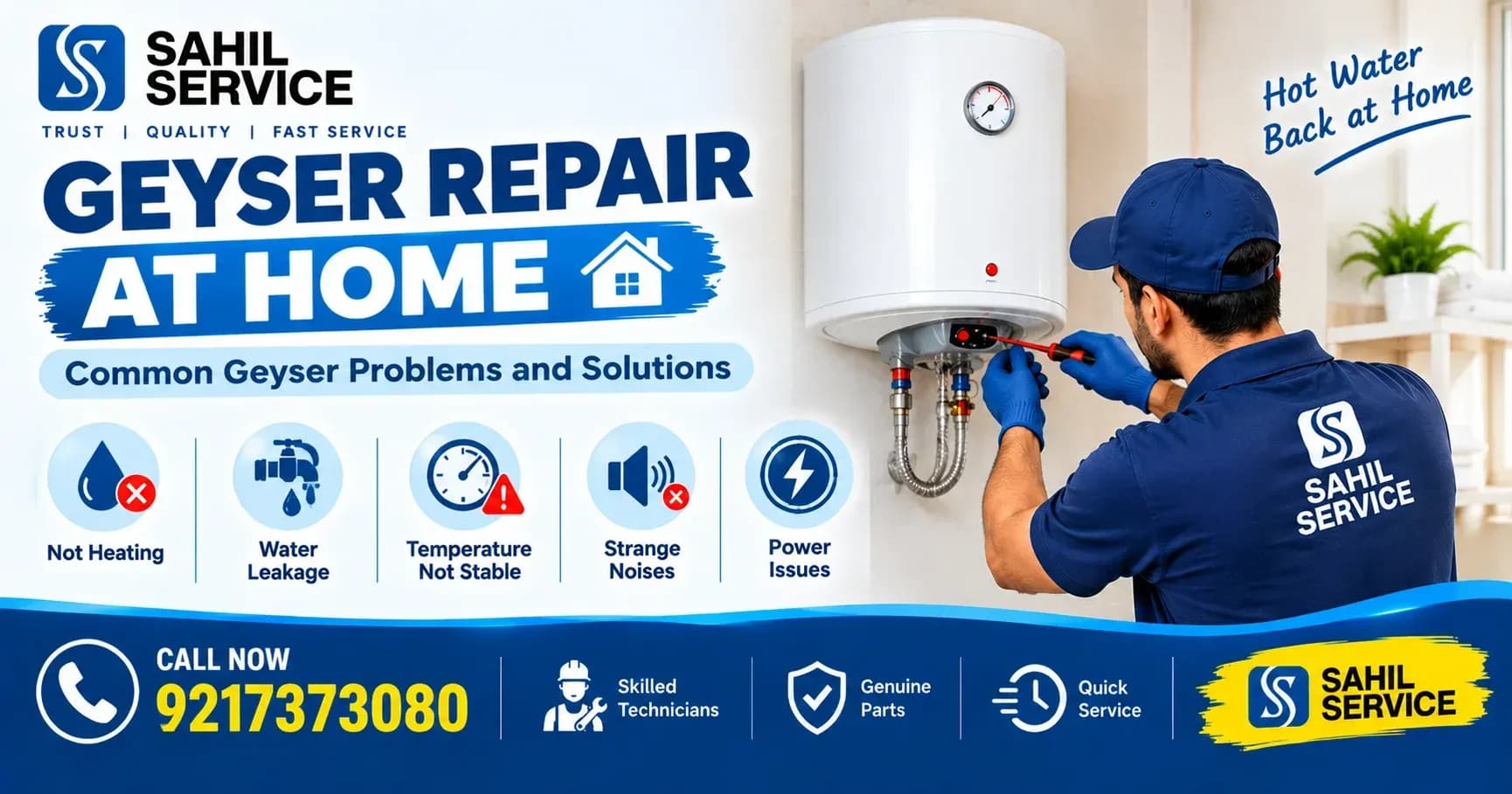
When winter hits, your geyser is the unsung hero of the house. You flip the switch every morning without a second thought, expecting warm water to just be there. But because it sits mounted high on a wall or tucked away in a corner, it's easy to forget just how hard it works.
Mixing high-voltage electricity with pressurized water and mineral-heavy tap supply creates a lot of wear and tear. Left alone, hard water minerals quickly turn into a chalky stone crust, heating coils burn out, electricity bills quietly climb, and minor drips turn into sudden morning breakdowns.
Taking care of your water heater doesn't take much, but a little timely attention goes a long way toward keeping your morning showers warm, safe, and energy-efficient. Here is everything you need to know about keeping your geyser running smoothly.
How often should a geyser be serviced?
As a rule of thumb, get your geyser checked and serviced at least once a year—ideally right before the cold weather sets in.
That said, your exact timeline depends on how much you use it and how hard your local water is. If your home runs on borewell water or high-mineral supply, scale builds up fast, meaning a quick service every 6 to 8 months is a smart move.
Don't wait for the unit to completely quit on you. Keep an eye out for these everyday warning signs:
- Water takes forever to heat up compared to before
- You hear strange popping, crackling, or rumbling noises from the tank
- Taps only produce lukewarm water even after running for 30 minutes
- Small white or chalky flakes float out in your hot water
- Moisture drips from the bottom casing or pipe joints
- Your power bill jumps unexpectedly during winter
- The main MCB trips the moment you turn on the switch
Catching scale buildup or a worn seal early costs a small fraction of what you'd spend on a burnt element or a rusted-out tank later.
Does a geyser need regular cleaning?
Yes, absolutely. Think of a storage geyser as a big settling tank.
Every time fresh water comes in and gets heated, minerals like calcium settle out. Fine sand, rusty particles from main lines, and mineral sludge drop to the bottom, while a crusty layer of limescale bakes itself onto the hot heating coil.
If you don't clean this gunk out every now and then:
- The scale layer acts like a thick blanket over the heating element, trapping heat inside instead of passing it to the water.
- Accumulated mud takes up physical space, leaving less room for actual hot water.
- Sludge sitting on the bottom accelerates rust on the inner steel walls.
During a standard service, a technician opens up the bottom panel, flushes out all the loose mud, checks the electrical terminals for heat wear, and makes sure the safety valves aren't stuck.
How often should a geyser be descaled?
Descaling isn't about following a strict calendar date; it's all about your water quality.
If you live in a soft-water zone, your geyser can comfortably go 18 to 24 months without needing a deep descale. But in hard-water areas, a thick coat of mineral scale can wrap around the coil in just 6 months.
You'll know it's time when your geyser starts making noise. That distinct popping, sizzle, or kettle-boiling sound you hear shortly after switching it on is water trapped beneath a crust of scale boiling violently against the superheated coil.
Whenever you hear those sounds, have the unit opened and descaled before the element cooks itself to death.
How do I clean a geyser heating element?
Cleaning an element involves turning off main power, draining the tank completely, unbolting the bottom plate, and carefully clearing off the hardened scale.
Though it sounds straightforward, this really isn't a DIY job for the weekend.
The heating coil sits right next to live electrical terminals and delicate thermostat tubes. If you try scraping away scale with a screwdriver or knife, it's very easy to puncture the element's metal sheath or snap the internal resistance wire. Once water gets inside that sheath, it meets live current—creating a dangerous short circuit or shock hazard.
If the scale layer is light, a tech can soak it in a gentle descaling fluid. If the crust is thick and pitted, swapping it out for a fresh element is always the safer, longer-lasting choice.
What is geyser descaling?
Descaling simply means stripping away the mineral crust (limescale) from the heating coil, thermostat tube, and inner tank walls.
When hard water gets heated past 55∘C, calcium rapidly settles onto the hottest surface it can find—which is always the metal coil. Over months, this turns into a rock-hard shell.
A standard descaling job involves:
- Cutting the power and shutting off the cold water inlet valve.
- Draining out all the standing water inside the tank.
- Unbolting the element assembly plate from the bottom.
- Scraping and flushing away scale from the coil and sensor pockets.
- Rinsing out all the loose mineral gravel from the tank floor.
- Putting it back together with a fresh rubber gasket so it doesn't drip.
Proper descaling gets your heating speed back to where it was when the geyser was brand new.
Why is geyser maintenance important?
Staying on top of maintenance isn't just about avoiding a cold morning shower—it keeps your energy bills down, your home safe, and your appliance working years longer.
Regular care pays off in several practical ways:
- Cheaper Power Bills: A clean coil heats water directly without wasting electricity trying to push heat through a thick wall of stone.
- Longer Appliance Life: Clearing out damp, corrosive mud stops the inner steel tank from rusting through from the bottom up.
- Full Tank Capacity: Keeps the full volume available for hot showers instead of filling half the tank with heavy sediment.
- Electrical Safety: Catches loose wires, melted insulation, or earthing issues before they trip breakers or pose safety risks.
- No Sudden Leaks: Replaces dry, brittle rubber seals before they give way and drip onto the electrical panel below.
How can I increase my geyser's lifespan?
Getting 8 to 10 solid years out of your storage geyser comes down to simple daily habits and a bit of routine care:
Book Geyser Maintenance Service
- Keep the Temp Moderate: Set your thermostat around 50∘C–55∘C rather than turning it all the way up to 70∘C. Water heated above 60∘C creates scale at double the speed.
- Don't Leave It On All Day: Turn the geyser off once everyone is done bathing. Leaving it running 24/7 keeps internal parts under constant expansion and contraction strain.
- Fix Drips Right Away: Never ignore a small leak from a pipe joint or valve. Water creeps under the outer shell and rusts out the unit from the outside.
- Change the Anode Rod: Good geysers have a sacrificial magnesium rod inside that attracts rust away from the main steel wall. Having a technician replace this inexpensive rod every 2 years can easily double your tank's life.
- Keep the Wall Area Dry: Make sure your bathroom gets enough ventilation so heavy steam doesn't settle over the electrical cover.
How can I reduce geyser electricity consumption?
Geysers are easily among the biggest energy consumers in a home, running on heavy 2000W to 3000W elements. But you can shave a good chunk off your bill with a few smart moves:
Get Geyser Energy Efficiency Service
- Keep the Coil Clean: A scale-coated element can waste 25% to 30% more power simply because it has to stay on much longer to heat the exact same amount of water.
- Switch Off After Use: Storage tanks lose heat over time. Heating water only when you actually plan to use it stops the element from cycling back on all day to reheat cooling water.
- Check Your Taps: A slow drip from a hot water tap acts like a constant drain on your geyser, forcing it to keep heating fresh cold water coming in to replace it.
- Pick the Right Size: Running a huge 25-liter geyser for just one person wastes a lot of electricity heating extra water that no one uses.
What maintenance does a storage geyser need?
Because storage geysers hold anywhere from 10 to 50 liters of pressurized hot water on your wall, they need a bit more attention than small instant units.
A thorough storage geyser checkup includes:
- Tank Flush: Draining out all the heavy sand, rust, and mineral sludge from the bottom.
- Element Inspection: Checking for surface cracks, warping, or heavy scale buildup.
- Thermostat Test: Making sure both the main thermostat and auto cut-off safety switches click off at the right temperatures.
- Safety Valve Test: Checking the spring on the pressure valve so it doesn't seize up from hard water.
- Anode Check: Checking how much protective magnesium is left on the anti-corrosion rod.
- Gasket Swaps: Replacing hardened rubber seals so water doesn't seep through the flange.
- Wiring Check: Tightening screws and replacing any wires showing signs of heat wear or discoloration.
When should a geyser heating element be replaced?
Slow heating doesn't automatically mean the coil is dead—a lot of times, it just needs a good descaling. But an element definitely needs to be replaced when:
Book Heating Element Replacement
- The Wire Inside Breaks: The coil snaps internally. Power reaches the unit, but the water stays completely cold.
- The Outer Shell Splits: Corrosion eats a hole in the metal sheath, letting water touch the live wire. This will instantly trip your home's MCB every time you switch it on.
- It's Physically Damaged: The element looks warped, swollen, or badly pitted from trapped heat.
- Current Leaks Into Water: A simple meter test shows power leaking to ground, which is a major safety risk.
Never try to reuse a split or damaged coil. Always get it replaced with a new, factory-rated part.
Geyser Maintenance and Service in Delhi
Whether your water heater needs its annual tune-up before winter, a deep tank descale, a fresh heating element, or a quick leak check, Sahil Service offers fast, doorstep geyser care across Delhi and nearby areas.
Book Geyser Maintenance in Delhi
Instead of waiting for a breakdown on a freezing morning, a skilled technician comes right to your door, opens up the unit safely, and handles everything on-site.
Sahil Service covers all routine needs:
- Yearly checkups and tune-ups
- Deep tank flushing and sludge removal
- Heating element descaling and replacement
- Thermostat testing and swaps
- Safety and pressure valve checks
- Fixing pipe drips and flange gasket leaks
- Resolving short circuits and MCB tripping problems
- Sacrificial anode replacements
Why Choose Sahil Service?
Proper appliance care takes real experience, the right tools, and honest advice on what actually needs fixing.
When you book with Sahil Service, you get:
- Doorstep Service: Everything is handled right in your bathroom—no unmounting or lugging heavy tanks around.
- Coverage Across Delhi: Quick response times throughout Delhi and nearby NCR locations.
- Honest Diagnostics: Clear feedback on whether a part just needs a clean, a minor repair, or a complete replacement.
- Safety First: Careful testing of grounding, electrical insulation, and pressure valves before handing it back to you.
- No Hidden Costs: Clear estimates provided up front before any work starts.
Final Thoughts
A well-maintained geyser works quietly, heats up fast, keeps your electric bills sensible, and stays safe for years.
Taking an hour once a year to flush out sediment and clear off limescale is all it takes to avoid sudden cold showers and pricey emergency repairs.
If your geyser is due for a checkup, taking longer than usual to heat, or making weird noises, reach out to Sahil Service to book a hassle-free doorstep visit anywhere in Delhi today.