Geyser Maintenance Guide: Cleaning, Descaling, Servicing, and Tips to Make Your Geyser Last Longer
Learn how to clean, descale and maintain your geyser, spot warning signs and prevent leaks. Explore geyser servicing and repair by Sahil Service in Delhi NCR
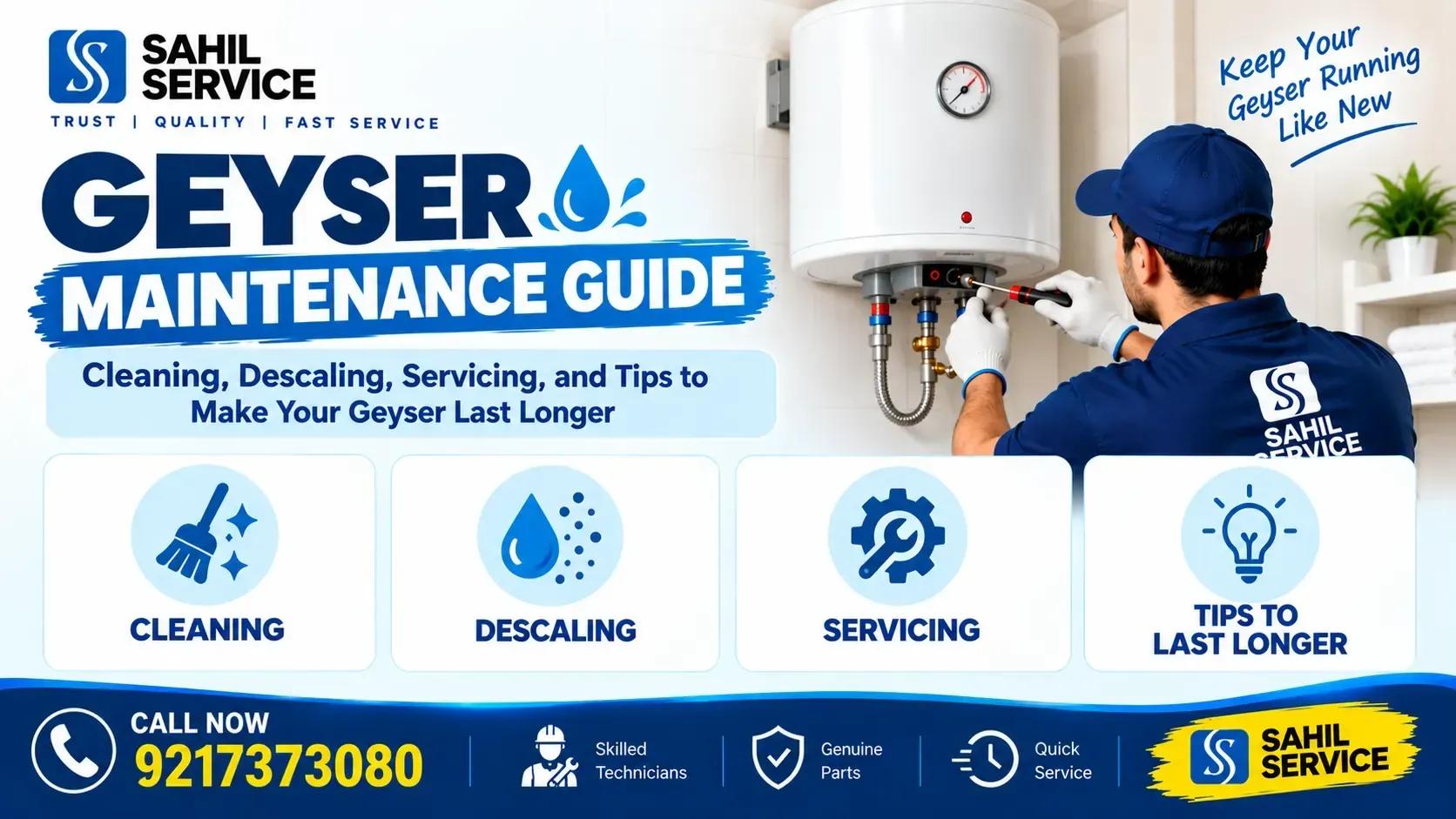
A geyser is one of those household appliances you rarely think about until the water turns cold on a busy morning. Perhaps your shower takes longer to warm up, the geyser makes a strange popping sound, or you notice a small patch of water beneath the unit. These signs may seem minor, but they can indicate that your water heater needs attention.
Regular geyser maintenance helps keep the appliance working efficiently, identifies potential problems early, and supports safe everyday use. Over time, minerals in the water can accumulate inside the tank and around the heating element. Electrical components, thermostats, valves, and pipe connections can also wear out.
Whether you have a storage geyser or an instant water heater, understanding basic maintenance can help you recognise when to clean the appliance and when to call a professional.
Sahil Service offers geyser repair, servicing, cleaning, and installation support in Delhi NCR, subject to local availability. If your geyser is not heating properly, leaking, or making unusual noises, professional inspection can help identify the cause and determine the right solution.
How Often Should a Geyser Be Serviced?
For most households, an annual geyser inspection is a useful starting point. However, the ideal servicing frequency depends on your geyser's model, water quality, usage, and the manufacturer's maintenance instructions.
Homes with hard water may need more frequent checks because dissolved minerals can gradually form scale inside the tank and on the heating element. A geyser used heavily throughout the year may also need closer attention than one used occasionally.
Consider arranging geyser servicing:
- Before winter, when hot-water demand typically increases.
- If the geyser has not been inspected for a long time.
- When heating takes longer than usual.
- If you hear popping, rumbling, or other unusual noises.
- When you notice water leakage, corrosion, or inconsistent temperatures.
- According to the maintenance schedule provided by the manufacturer.
A professional geyser service may include checking the heating element, thermostat, electrical connections, safety valve, water pipes, and overall heating performance. Tank cleaning or descaling may be recommended if mineral deposits have accumulated.
Regular servicing does not mean every component needs to be replaced every year. A technician should assess the appliance's condition and recommend only the maintenance or repairs it requires.
If you are looking for geyser servicing in Delhi NCR, Sahil Service can help you explore suitable repair and maintenance options for your appliance.
How to Clean a Geyser at Home?
Cleaning the outside of a geyser is relatively simple, but cleaning its internal tank and heating components requires greater care. Before attempting any maintenance, it is important to understand which tasks are safe to do yourself and which should be handled by a qualified technician.
For basic external cleaning, follow these steps:
- Switch off the geyser and allow its outer surface to cool.
- If the manufacturer's instructions permit it, isolate the appliance from its electrical supply before cleaning.
- Wipe the exterior with a soft, slightly damp cloth.
- Keep the control panel, electrical connections, and wiring dry.
- Check the surrounding area for visible leaks, rust, or damp patches.
- Consult the user manual if you notice anything unusual.
Do not spray water directly onto the geyser, use abrasive cleaners, or open the casing to reach internal components.
Internal cleaning is different. Mineral scale and sediment may collect inside the tank, but removing these deposits can involve draining hot water, managing pressure, disconnecting components, and inspecting electrical parts. These tasks should be carried out by a trained technician using the correct procedure for your model.
If your geyser heats slowly, makes unusual noises, or produces discoloured water, a professional inspection can help determine whether internal cleaning is necessary.
Sahil Service offers geyser servicing and repair assistance for common appliance problems in Delhi NCR, subject to local availability.
How to Remove Scale from a Geyser Heating Element?
If you live in an area with hard water, you may eventually notice that your geyser takes longer to heat water. One possible reason is mineral scale accumulating on the heating element or inside the tank.
Scale forms when dissolved minerals in water build up over time. A thick layer can interfere with heat transfer and may contribute to inefficient heating, unusual noises, or increased wear on some components.
Removing scale from a geyser heating element generally requires more than wiping the accessible surfaces. The correct process depends on the type of heating element, the appliance design, and the manufacturer's instructions.
A professional descaling procedure may involve:
- Isolating the geyser from its electrical supply.
- Allowing the water to cool and safely relieving pressure.
- Draining the appliance according to the manufacturer's procedure.
- Accessing and inspecting the heating element where the design permits.
- Removing deposits using a method and cleaning agent approved for that model.
- Checking seals, connections, and components before reassembly.
- Refilling the unit and checking for leaks before restoring power.
Never remove a heating element while the geyser is connected to electricity or contains hot, pressurised water. Avoid using strong acids, harsh chemicals, or metal tools that could damage the element, tank lining, or seals.
If the heating element is badly corroded or damaged, cleaning may not be enough, and replacement may be necessary.
For geyser heating element cleaning and repair, Sahil Service can help assess the problem and recommend whether descaling, repair, or component replacement is appropriate.
How to Maintain an Electric Geyser?
An electric geyser needs attention to both its water-heating system and its electrical components. A few sensible habits can help you spot developing problems before they become major repairs.
Here are practical electric geyser maintenance tips:
Check for leaks. Look around the inlet and outlet pipes, valves, and visible joints. Even a small, recurring drip deserves attention.
Monitor heating performance. If the water suddenly takes much longer to heat or does not reach its usual temperature, the heating element or thermostat may need inspection.
Listen for unusual sounds. Persistent popping or rumbling can indicate mineral deposits or another internal issue.
Use a suitable temperature setting. Follow the manufacturer's recommendations and avoid unnecessarily high temperatures that increase scalding risk.
Keep electrical components dry. Water near switches, wiring, or electrical connections can be dangerous. Do not touch wet electrical components.
Check the safety valve professionally. Never block or disable a pressure relief valve to stop a leak. It is an important safety component.
Follow the service schedule. The appropriate maintenance interval varies by model, water quality, and usage.
If the geyser repeatedly trips the circuit breaker, gives off a burning smell, produces sparks, or causes an electrical shock, stop using it. Switch off the power at the breaker only if it is safe to do so, and contact a qualified professional.
Sahil Service provides geyser repair and maintenance support for issues involving heating performance, thermostats, valves, wiring, and other common components, subject to service availability.
Book Electric Geyser Maintenance
How to Increase the Lifespan of a Geyser?
Replacing a geyser can be an unexpected expense, especially when the appliance fails during winter. Although no maintenance routine can make a geyser last forever, proper use and timely repairs may help extend its useful life.
Here is how you can look after your water heater:
Arrange regular inspections. Periodic checks can identify corrosion, worn seals, loose connections, and other issues before they worsen.
Address hard-water scale. If your water contains high levels of minerals, ask a technician whether periodic descaling is suitable for your model.
Avoid ignoring small leaks. Water around the geyser can damage surrounding surfaces and may signal a problem with a connection, valve, seal, or tank.
Use the correct temperature setting. Follow the manufacturer's guidance rather than keeping the thermostat at maximum without a reason.
Do not overload the appliance. Choose a geyser capacity that suits your household's hot-water requirements.
Keep the installation area suitable. Ensure the appliance remains accessible for inspection and that its electrical and plumbing connections meet the manufacturer's requirements.
Replace faulty components when necessary. A worn thermostat, damaged heating element, or defective safety valve should be assessed promptly.
Pay attention to the tank's condition. Internal corrosion can eventually make a geyser unsafe or uneconomical to repair. In some cases, replacing the appliance is the better option.
The lifespan of a geyser depends on its construction, water quality, usage, installation, and maintenance. There is no single lifespan that applies to every brand and model.
Sahil Service can help assess geyser problems and determine whether servicing, a component repair, or replacement is the more practical next step.
Get Geyser Maintenance Assistance
What Are the Signs That a Geyser Needs Servicing?
A geyser does not always stop working suddenly. In many cases, it gives warning signs that something needs attention. Recognising these signs early can help you arrange an inspection before the problem disrupts your daily routine.
Watch for the following symptoms:
- Water is not heating properly: The heating element, thermostat, electrical supply, or another component may be responsible.
- Heating takes much longer than usual: Colder incoming water can increase heating time, but a sudden change may indicate scale buildup or a fault.
- The geyser makes unusual noises: Popping or rumbling may indicate mineral deposits or another internal problem.
- Water leaks around the appliance: A leak may originate from a pipe, joint, valve, seal, or damaged tank.
- Water appears rusty or discoloured: This may indicate corrosion or an issue with the water supply or plumbing.
- The temperature fluctuates: A thermostat or other component may not be regulating the temperature correctly.
- The circuit breaker trips repeatedly: Electrical faults, damaged wiring, or a failing component may be involved.
- The indicator light behaves unexpectedly: This may indicate an electrical or control issue, depending on the model.
Not every symptom means the geyser needs a full service. For example, winter water may take longer to heat because the incoming supply is colder. A technician can help distinguish normal seasonal changes from faults.
If you notice a burning smell, sparks, a severe leak, or repeated electrical tripping, stop using the appliance and seek professional assistance rather than continuing to test it.
For geyser repair service in Delhi NCR, Sahil Service can help investigate common problems and suggest suitable repairs based on the appliance's condition.
What Happens If a Geyser Is Not Serviced Regularly?
A geyser may continue working for months without maintenance, but that does not necessarily mean every component is in good condition. Over time, deposits can build up, connections may deteriorate, and worn components can affect heating performance.
Neglecting necessary maintenance may lead to several problems.
Reduced heating efficiency: Mineral deposits can interfere with heat transfer, potentially increasing heating time and energy consumption.
Unexpected breakdowns: A failing heating element, thermostat, or electrical connection may eventually stop the appliance from working.
Water leakage: Worn seals, corroded fittings, faulty valves, or tank damage may cause leaks.
Unusual operating noises: Sediment and mineral scale can contribute to popping or rumbling sounds.
Temperature control issues: A malfunctioning thermostat may cause inconsistent or excessively hot water.
Costlier repairs: If a small issue goes unaddressed, it may contribute to damage to other components or surrounding areas.
Safety concerns: Electrical faults, excessive pressure, and uncontrolled water temperature can create risks if the appliance is not operating correctly.
However, servicing cannot prevent every failure. Some components wear out naturally, and a severely corroded tank may need replacement rather than repair.
The purpose of regular maintenance is to identify issues, keep the appliance operating as intended, and address faults before they become more disruptive.
If your geyser has not been inspected for a long time, consider arranging a professional assessment before winter or whenever you notice changes in performance.
How to Clean a Geyser Tank?
Cleaning a geyser tank can help remove accumulated sediment and mineral deposits when they are affecting the appliance. However, not every geyser requires frequent tank cleaning, and the correct method depends on the tank design and the manufacturer's recommendations.
Storage geysers hold a quantity of water inside an insulated tank. Over time, minerals and sediment may settle at the bottom, especially when the water supply contains a high concentration of dissolved minerals.
A technician may recommend tank cleaning if you notice:
- Persistent popping or rumbling sounds.
- Slower heating than usual.
- Sediment or discoloured water.
- A history of hard-water scale.
- Maintenance requirements specified in the user manual.
Professional tank cleaning generally involves isolating the appliance, allowing the water to cool, relieving pressure, draining the tank safely, and removing deposits using a method suitable for the model. The technician may also inspect the heating element, internal lining, seals, and other accessible components.
There are important limitations. Some tanks have protective internal linings or components that can be damaged by aggressive cleaning methods. Harsh chemicals, unsuitable descaling products, and abrasive tools may cause more harm than good.
Do not open the geyser tank or attempt to drain hot, pressurised water yourself. If the appliance is under warranty, check the manufacturer's conditions before arranging internal maintenance.
Sahil Service can help assess whether your geyser needs tank cleaning, descaling, or another type of maintenance.
Is Geyser Descaling Necessary?
Geyser descaling can be necessary when mineral deposits accumulate and begin affecting the appliance's performance. However, descaling is not automatically required every year for every geyser.
The need for descaling depends on several factors:
- The hardness of your water supply.
- How frequently you use hot water.
- The age and condition of the appliance.
- The type of heating element and tank.
- The maintenance schedule recommended by the manufacturer.
If your geyser is taking longer to heat, making persistent popping sounds, or showing other signs of scale buildup, a technician can inspect it and determine whether descaling is appropriate.
Descaling may help remove mineral deposits and restore more effective heat transfer where scale is the cause of the problem. However, it will not fix every heating issue. A damaged heating element, faulty thermostat, electrical problem, or corroded tank may require a different solution.
It is also important to use the correct descaling method. An unsuitable chemical or cleaning process can damage the tank lining, seals, or heating components.
For homeowners searching for geyser descaling service in Delhi NCR, Sahil Service can help assess the condition of the appliance and recommend suitable maintenance or repair options.
How to Prevent Geyser Water Leakage?
Water leakage is one of the most common reasons homeowners seek geyser repair. A small drip may appear harmless at first, but it can damage walls, cabinets, flooring, and nearby electrical components if left unaddressed.
The first step is to understand where the water is coming from. Leakage around a pipe connection is different from water escaping through a faulty safety valve or a corroded tank.
Here are some ways to reduce the likelihood of geyser leakage:
Inspect visible connections. Look for damp patches, dripping joints, or signs of corrosion around the inlet and outlet pipes.
Arrange repairs promptly. A worn seal, loose fitting, or damaged pipe should be assessed before the leak worsens.
Keep the safety valve functional. Never plug, block, or disable a pressure relief valve. If it leaks continuously, arrange an inspection.
Check for corrosion. Rust on the outer casing or water emerging from the tank body may indicate a more serious problem.
Avoid excessive water pressure. Ensure the installation meets the appliance's specified pressure requirements and use suitable pressure-control equipment where needed.
Arrange professional maintenance. Periodic checks can identify deteriorating fittings and other issues.
A little water may occasionally discharge from a pressure relief system under certain operating conditions, depending on the appliance. However, continuous leakage, an unexplained puddle, or water coming from the tank body should not be ignored.
If water is close to electrical switches or wiring, do not touch the wet area or the appliance. Isolate the power at the breaker only if it is safe to do so, shut off the water supply if you can do so safely, and contact a qualified technician.
Sahil Service offers geyser leakage inspection and repair support for common problems involving pipes, fittings, valves, and related components, subject to local availability.
What Is Included in Geyser Servicing?
A proper geyser service should be based on the appliance's model, condition, and symptoms rather than following the same checklist for every unit.
A professional inspection may cover several areas.
Heating element inspection: Checking for signs of damage, corrosion, or mineral scale that may affect heating.
Thermostat and temperature control: Assessing whether the geyser heats and regulates temperature as expected.
Electrical connections: Inspecting accessible wiring, switches, and connections for signs of wear or damage.
Safety valve inspection: Checking the pressure relief mechanism and associated fittings without disabling any safety feature.
Water pipe and joint inspection: Looking for leakage, loose fittings, and visible corrosion.
Tank condition assessment: Checking for signs of corrosion or sediment-related problems and determining whether internal cleaning is required.
Cleaning and descaling, if needed: Carrying out appropriate cleaning procedures where suitable for the appliance.
Performance checks: Verifying correct operation after maintenance and checking for leaks before returning the unit to normal use.
Not every service visit includes every task. Tank cleaning, descaling, spare parts, major electrical repairs, and installation work may be charged separately depending on the service provider and the work required.
Before booking, ask what the service includes, whether inspection charges apply, and whether parts and labour are priced separately.
Sahil Service offers geyser servicing, repair, cleaning, and installation assistance in Delhi NCR, subject to service availability. If your appliance is not heating, leaking, or making unusual noises, explain the symptoms when enquiring so the appropriate inspection can be arranged.
Book Professional Geyser Servicing
Why Choose Sahil Service for Geyser Servicing in Delhi NCR?
When your geyser needs attention, you want a service option that helps you understand the problem and the work required. Sahil Service provides support for common geyser maintenance and repair needs, helping homeowners explore suitable solutions for their water heaters.
You can enquire about:
- Geyser servicing and routine maintenance.
- Heating element inspection and repair.
- Thermostat and temperature-control issues.
- Geyser cleaning and descaling requirements.
- Water leakage from pipes, fittings, and valves.
- Electrical and indicator-light problems.
- Geyser installation and replacement support.
Sahil Service also offers support for other home appliance repair needs, including refrigerators, washing machines, air conditioners, microwaves, and RO water purifiers, subject to service availability.
The recommended solution and final cost depend on the appliance, the fault, required spare parts, and the work involved. Confirm the service area, charges, and appointment availability before booking.
Visit the Sahil Service geyser service page to enquire about geyser repair, maintenance, and installation options.
Explore Sahil Service Geyser Services
Frequently Asked Questions About Geyser Maintenance
How often should a geyser be cleaned?
There is no single cleaning interval that suits every geyser. Follow the manufacturer's maintenance guidance and consider water hardness, usage, and signs of sediment or scale buildup.
Can I descale my geyser myself?
Internal descaling can involve electrical isolation, hot water, pressure, and components that are easily damaged by unsuitable chemicals. Unless the manufacturer explicitly provides a safe procedure for the task, professional descaling is the safer option.
Does regular geyser servicing reduce electricity consumption?
Servicing may help improve heating performance if scale, faulty controls, or other maintenance issues are causing inefficiency. Actual energy savings depend on the appliance's condition, usage, temperature setting, and water supply.
Why is my geyser making a popping sound?
Popping or rumbling may be caused by mineral deposits and sediment, but other issues are possible. If the noise is persistent or accompanied by poor heating or leakage, arrange an inspection.
Is geyser descaling necessary every year?
Not necessarily. The frequency depends on water hardness, appliance type, usage, and manufacturer recommendations. A technician can assess whether descaling is required.
How do I know whether my geyser needs repair or replacement?
A repair may be suitable for a faulty thermostat, heating element, valve, or pipe connection. A severely corroded or damaged tank may be unsafe or uneconomical to repair. A professional inspection can help determine the most appropriate option.
Does Sahil Service provide geyser repair in Delhi NCR?
Sahil Service offers geyser repair, maintenance, cleaning, and installation support in Delhi NCR, subject to local availability. Contact the service team to confirm coverage and discuss the issue with your appliance.
Book Geyser Servicing with Sahil Service
A well-maintained geyser makes everyday life easier, especially when you need dependable hot water during winter. Paying attention to slow heating, unusual noises, leaks, and other warning signs can help you identify problems before they become more disruptive.
From routine geyser maintenance and tank cleaning to descaling, heating element repairs, and water leakage issues, the right service depends on your appliance's condition and manufacturer's instructions.
If your geyser needs inspection or is not working as expected, visit Sahil Service to enquire about geyser servicing and repair in Delhi NCR. Arrange the right maintenance for your appliance and keep your home's hot-water system in good working order.