Geyser Maintenance Guide: Cleaning, Descaling, Electricity Saving & Heating Element Care
Learn how to maintain your geyser with proper cleaning, descaling, heating element care and electricity-saving tips to improve performance and extend its lifespan
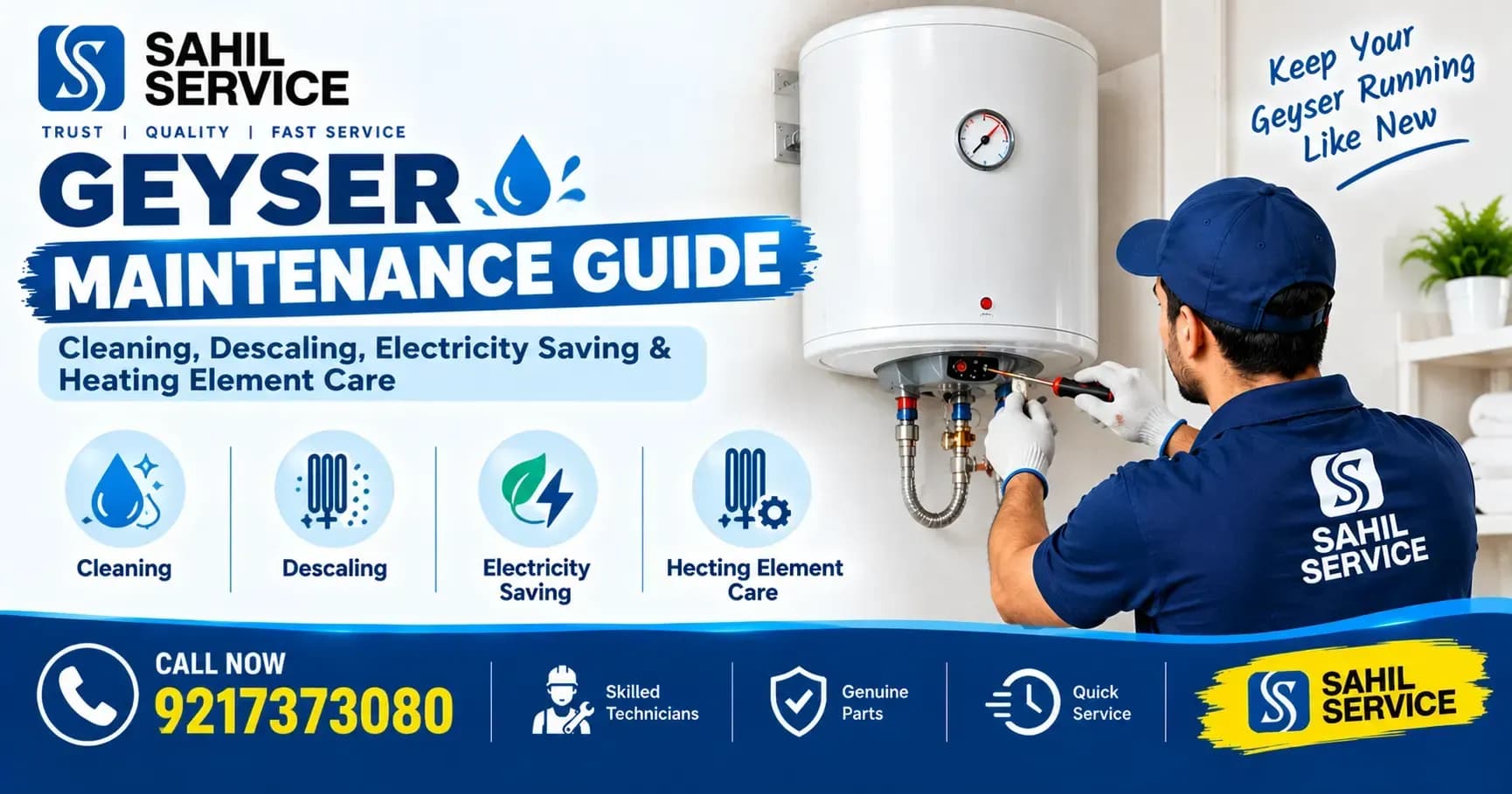
When winter hits, your geyser becomes the unsung hero of your home. You flip the switch every morning without thinking, expecting a hot stream of water ready to go. But because it sits mounted high on a wall or tucked away in a corner, it's easy to forget that a water heater works under intense daily stress.
Between high electrical wattage, constant water pressure, and the heavy mineral content found in many water supplies, a geyser naturally wears down over time. Left completely ignored, hard-water minerals settle into a rock-like crust, heating elements choke, electricity bills quietly creep up, and minor component wear turns into a sudden breakdown.
Taking care of your geyser doesn't require complex everyday effort, but a little preventive attention goes a long way toward keeping your morning showers hot, safe, and energy-efficient. Here is everything you need to know about keeping your water heater in peak condition.
How often should a geyser be serviced?
As a general rule, a household geyser should be professionally inspected and serviced at least once a year—ideally right before the winter season sets in.
However, your specific maintenance timeline depends heavily on two factors: your daily usage and your local water hardness. If you live in an area with hard ground water or borewell supply, mineral deposits accumulate exponentially faster, meaning an inspection every 6 to 8 months might be necessary.
Don't wait for a complete system failure to schedule a checkup. Watch for these early warning signs:
- Water takes noticeably longer to heat than it used to
- Strange popping, cracking, or rumbling sounds coming from inside the tank
- Tap water temperature peaks at "lukewarm" even after 30 minutes
- Small white or yellowish mineral flakes coming out of the hot water tap
- Moisture dripping from the base or pipe connections
- Your electricity bill spikes unexpectedly during winter months
- The household MCB trips when you flip the geyser switch
Catching minor scale buildup or a worn seal during a routine service costs a fraction of what you'd pay for an emergency heating element or tank replacement later on.
Does a geyser need regular cleaning?
Yes, absolutely. A storage geyser acts like a settling tank for your water supply.
Every time cold water enters the tank and gets heated, dissolved minerals like calcium and magnesium separate from the liquid. Fine sand, rust particles from old supply lines, and mineral sludge sink to the bottom of the inner tank, while a chalky layer of limescale bakes onto the hot surface of the heating element.
If you don't clean out this internal sediment periodically:
- The layer of scale acts like thermal insulation, trapping heat inside the element rather than warming the water.
- Sediment takes up physical volume, reducing how much hot water the tank can hold.
- The sludge layer creates localized hotspots that accelerate internal tank corrosion.
During a standard maintenance service, a technician opens the lower housing, flushes out the accumulated sediment floor, checks electrical contacts for heat damage, and verifies that safety valves operate freely.
How often should a geyser be descaled?
Descaling isn't dictated by a rigid calendar date; it's dictated by your water quality.
In soft-water areas, a geyser can easily go 18 to 24 months without needing a full descaling. In hard-water neighborhoods, however, a thick jacket of mineral scale can form around the heating element in as little as 6 months.
You'll know it's time to descale when your geyser starts "talking" to you. That distinct popping, sizzling, or kettle-like boiling noise you hear shortly after turning the geyser on is the sound of water trapped under a layer of mineral crust boiling violently against the superheated metal element.
Rather than waiting for the element to burn out under that thermal stress, have the tank opened and descaled as soon as those sounds become noticeable.
How do I clean a geyser heating element?
Cleaning a heating element involves isolating the electrical supply, completely draining the pressurized water storage tank, unbolting the mounting flange, and scraping or chemically dissolving the hardened mineral crust off the copper/sheath tubing.
While it sounds straightforward, cleaning a geyser element is not a DIY job for beginners.
The element sits right alongside high-voltage electrical terminals and sensitive thermostat capillary tubes. If you try to chip away hard scale using a sharp screwdriver or hammer, you risk puncturing the element's protective outer sheath or damaging the internal resistance wire. Once that sheath is breached, water meets live electricity, creating an immediate short circuit or severe shock hazard the next time you turn it on.
If the scale layer is light, a professional technician can soak the assembly in a mild descaling solution. If the crust is thick and pitted, replacing the element entirely is usually far safer and more cost-effective.
What is geyser descaling?
Geyser descaling is the targeted process of removing mineral buildup (limescale) from the internal heating element, thermostat sensor tube, and inner tank walls.
When hard water is heated past 55∘C, calcium carbonate rapidly precipitates out of the solution and attaches itself to the hottest surface available—which is always the metal heating coil. Over time, this forms a hard, rock-like casing around the coil.
The descaling process involves:
- Isolating power and shutting off the cold water inlet.
- Draining the entire volume of water from the storage tank.
- Unbolting the heating element assembly plate from the bottom of the tank.
- Mechanically and chemically removing scale from the coil and thermostat pockets.
- Flushing the loose mineral gravel out of the bottom dish of the tank.
- Re-sealing the assembly with a fresh rubber gasket to prevent post-service leaks.
Proper descaling restores heat transfer efficiency, bringing your heating speed back to factory levels.
Why is geyser maintenance important?
Preventive geyser maintenance isn't just about avoiding a cold shower; it directly impacts your safety, monthly utility bills, and appliance longevity.
When you invest in periodic maintenance, you gain several clear benefits:
- Lower Electricity Bills: A clean heating element transfers energy straight into the water without wasting power heating a thick shell of stone first.
- Extended Appliance Lifespan: Removing corrosive sludge prevents the inner steel liner from rusting through prematurely.
- Consistent Hot Water Volume: Keeps the full storage capacity available for your family rather than displacing room with heavy sediment.
- Electrical Safety: Identifies loose wiring, charred terminal insulation, or failing earthing connections before they trip breakers or pose shock hazards.
- Leak Prevention: Replaces hardened, brittle rubber gaskets before they give way and drip water onto internal electrical components.
How can I increase my geyser's lifespan?
Getting 8 to 10 years of reliable performance out of a storage geyser comes down to smart daily usage habits and proactive care:
Book Geyser Maintenance Service
- Set the Thermostat Wisely: Keep your target temperature set around 50∘C–50∘C rather than maximum (70∘C). Water heated past 60∘C causes scale to precipitate at a drastically higher rate.
- Don't Run It 24/7: Switch the geyser off once everyone in the house has finished showering. Leaving a storage geyser on continuously subjects internal components to non-stop expansion-and-contraction heating cycles.
- Address Leaks Instantly: Never ignore a slow drip from a pipe coupling or safety valve. Moisture creeps into outer covers and corrodes internal steel shells from the outside in.
- Replace Sacrificial Anodes: Quality geysers feature a magnesium anode rod inside the tank designed to corrode instead of your steel tank. Having a technician inspect and replace this 300–600 INR rod every 2 years doubles the life of your tank.
- Keep the Outer Casing Dry: Ensure your bathroom has adequate ventilation so steam doesn't collect on the lower electrical panel.
How can I reduce geyser electricity consumption?
Geysers are among the most power-hungry appliances in any home, typically running on heavy 2000W to 3000W heating coils. However, you can significantly cut down their impact on your monthly electric bill:
Get Geyser Energy Efficiency Service
- Descale Regularly: A scale-coated element can increase power consumption by up to 25–30% simply because it has to run much longer to heat the same volume of water.
- Turn It Off When Done: Modern tanks are insulated, but "standby heat loss" still occurs. Heating water only when you actually plan to use it prevents the element from constantly kicking on throughout the day to reheat cooling water.
- Optimize Shower Habits: Consider installing low-flow showerheads, which reduce total hot water demand without sacrificing water pressure.
- Match Capacity to Need: Using a massive 25-liter geyser for a single person's quick wash wastes substantial electricity heating excess water that won't be used.
- Fix Dripping Hot Taps: A slow-dripping hot water tap bleeds heated water continuously, forcing the geyser to cycle on repeatedly all day long.
What maintenance does a storage geyser need?
Because storage geysers hold anywhere from 10 to 50 liters of water under constant mains pressure, their maintenance checklist is slightly more involved than that of compact instant heaters.
Key focus areas during a storage geyser service:
- Tank Flush-Out: Draining heavy sediment, sand, and mineral gravel from the base of the cylinder.
- Heating Element Inspection: Checking for surface cracks, pitting, or thick limescale buildup.
- Thermostat Calibration: Testing primary cut-off accuracy and verifying high-limit safety reset switches.
- Pressure Relief Valve (PRV) Test: Manually checking the spring lever on the safety valve to ensure it isn't seized shut by hard water deposits.
- Anode Rod Check: Measuring remaining magnesium thickness on the internal anti-corrosion rod.
- Seal & Gasket Swaps: Replacing compressed, dry rubber flanges to prevent leaks under pressure.
- Wiring & Terminal Check: Tightening terminal screws and checking wire insulation for heat discoloration or charring.
When should a geyser heating element be replaced?
Slow heating doesn't automatically mean your heating element is broken—often, it just needs a good descaling. However, an element has reached the end of its life and must be replaced when:
Book Heating Element Replacement
- The Resistance Wire Snaps: The coil suffers an internal break. The geyser receives full electrical power, but the water stays completely cold.
- The Outer Sheath Cracks: Corrosion eats a hole through the metal tube housing the resistance wire. Water touches the wire, instantly tripping your home's MCB or ELCB/RCCB breaker every time you switch it on.
- Heavy Pitting and Distortion: The element is physically warped, swollen, or severely pitted from years of trapped heat under thick scale.
- Electrical Leakage: A multimeter test reveals resistance dropping to ground, indicating current is leaking through the element into the water supply.
Attempting to reuse a cracked or grounded heating element is extremely dangerous. Always swap a damaged coil for a new, factory-rated replacement.
Geyser Maintenance and Service in Delhi
Whether your water heater needs an annual pre-winter tune-up, thorough tank descaling, a new heating element, or a complete safety inspection, Sahil Service provides fast, reliable, doorstep geyser maintenance across Delhi and surrounding regions.
Book Geyser Maintenance in Delhi
Instead of waiting for an unexpected breakdown on a freezing morning, a trained technician comes straight to your home, assesses your unit's internal condition, and carries out necessary servicing cleanly and efficiently.
Sahil Service covers all aspects of geyser care:
- Full annual servicing and performance checks
- Tank flushing and heavy sediment removal
- Professional heating element descaling and replacement
- Thermostat testing and replacement
- Safety valve and pressure-relief testing
- Pipe leak and internal flange gasket repairs
- MCB tripping and electrical short-circuit repairs
- Anode rod inspection and replacements
Why Choose Sahil Service?
Proper appliance maintenance requires technical expertise, proper diagnostic tools, and transparent pricing.
When you book with Sahil Service, you benefit from:
- Doorstep Convenience: Complete servicing carried out right in your bathroom—no carrying heavy appliances around town.
- Delhi-Wide Service: Fast response times across Delhi and adjacent NCR areas.
- Accurate Diagnostics: Clear explanations of what needs cleaning, what needs repair, and what is working fine.
- Safety First: Strict adherence to electrical grounding and pressure-safety standards.
- Upfront Communication: Full cost estimates provided before any component replacement or repair work begins.
Final Thoughts
A well-maintained geyser works quietly, warms water quickly, keeps your electricity bills in check, and operates safely for years.
Taking an hour once a year to flush out sediment, check electrical connections, and clear off limescale is all it takes to prevent sudden morning cold shocks and expensive emergency repairs.
If your water heater is due for a checkup, heating slowly, or making strange noises anywhere in Delhi or nearby areas, reach out to Sahil Service to schedule a professional doorstep maintenance visit today.