Fridge Leaking Water? Quick Fixes for a Dripping Refrigerator
Stop fridge water leaks with these simple tips. Learn why your refrigerator is leaking and get fast doorstep repair service from Sahil Service.
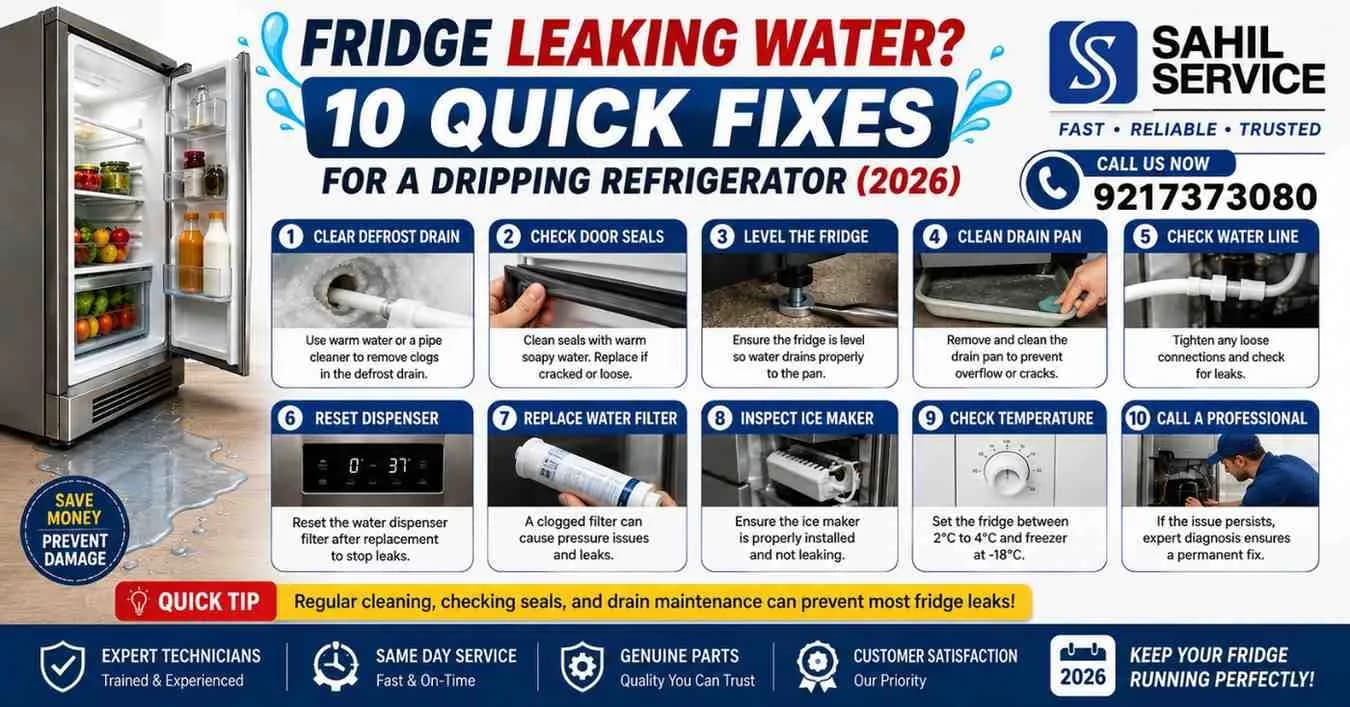
Why Is My Fridge Leaking Water? 10 Simple Fixes
If your fridge is leaking water, the cause is usually a blocked defrost drain, damaged door gasket, cracked or full drip pan, uneven refrigerator, or a problem with the water line. Where you see the water can help you find the cause. Water may collect inside the fridge, under the refrigerator, on the floor, from the top, or near the ice maker.
Before calling a technician, you can safely check a few common causes at home. If the leak continues or the refrigerator is also not cooling properly, professional inspection may be needed.
Why Is My Fridge Leaking Water?
A refrigerator normally produces some water during its defrost cycle. The water should flow through the defrost drain into a drip pan underneath the appliance, where it normally evaporates.
A leak can happen when that process is interrupted.
| Common Cause | What You May Notice | What You Can Check |
| Blocked defrost drain | Water inside the fridge or under it | Check the drain opening for blockage |
| Frozen drain tube | Water collects inside or reaches the floor | Look for ice around the drain area |
| Damaged door gasket | Frost, moisture or water near the door | Check the rubber seal for gaps or tears |
| Refrigerator not level | Water collects toward the front | Check whether the fridge is properly positioned |
| Cracked or full drip pan | Water directly under the fridge | Inspect the pan for cracks or excess water |
| Water line problem | Water near the back or ice maker | Check for a loose, kinked or damaged line |
| Excessive ice buildup | Water appears after ice melts | Check the freezer for unusual frost or ice |
The location of the water is often the easiest way to narrow down the problem.
Where Is the Water Coming From?
Before trying a repair, find where the water first appears.
Water Inside the Fridge
Water collecting on the bottom shelf or near the back wall can point to a blocked or frozen defrost drain. Food or ice can also block the drain opening.
Water Under the Fridge
Water directly underneath the refrigerator can come from the drip pan, drain system, or a water connection.
Water on the Floor
If water is spreading onto the kitchen floor, check the defrost drain, drip pan, refrigerator position, and water line if your model has an ice maker or water dispenser.
Water From the Top
Water appearing from the top area can be related to the ice maker, water dispenser line, condensation, or water moving from the freezer area.
Water Near the Ice Maker
If your refrigerator has an ice maker, check the water supply connection and visible tubing for a loose connection, kink or damage.
Why Is My Fridge Leaking Water on the Floor?
A fridge can leak water onto the floor when water from the normal defrost process cannot reach the drip pan correctly.
The defrost drain is one of the first things to check. When the drain becomes blocked by ice or debris, melted water may collect inside the refrigerator and eventually flow onto the floor.
A damaged or misplaced drip pan can cause a similar problem. The water may reach the pan but then escape underneath the refrigerator.
An incorrectly positioned refrigerator can also affect how water moves through the drain system. If the appliance is not positioned as intended by the manufacturer, water may collect toward the front instead of draining correctly.
If the refrigerator has an ice maker or water dispenser, also check the visible water supply line and connections for leaks.
Why Is Water Leaking Inside My Refrigerator?
Water dripping or collecting inside the refrigerator is often related to the defrost drain.
During the defrost cycle, ice melts and the water should move through the drain. If the drain opening or tube is blocked, water can remain inside the refrigerator.
Other possible causes include:
- Ice blocking the drain opening
- Food blocking the drain area
- A door gasket that does not seal properly
- Excessive frost or ice buildup
- A problem with the defrost system
- Excess moisture inside the refrigerator
First, look at where the water is collecting. If it is mainly near the back wall or bottom of the refrigerator, check the drain area.
Do not use sharp objects to break ice inside the refrigerator. You could damage the liner, drain or other components.
How to Fix a Leaking Refrigerator Step by Step
Follow these checks in order. Stop if you are not comfortable working around the appliance.
1. Switch Off and Unplug the Refrigerator
Before inspecting parts that require access behind or underneath the appliance, switch it off and unplug it from the power supply.
2. Check Where the Water Starts
Look inside the refrigerator, underneath it, around the back and near the ice maker if your fridge has one.
Knowing the starting point makes troubleshooting much easier.
3. Check the Defrost Drain
Look for the drain opening inside the refrigerator, usually around the rear section depending on the model.
If you can see visible debris around the opening, clean it carefully.
For an accessible drain, warm water can help clear minor blockages. Do not force tools deep into the drain.
4. Look for Ice Around the Drain
If the drain area is covered with ice, the water may not be able to pass through.
Allow the ice to melt naturally after switching off the refrigerator, or follow the manufacturer's instructions for defrosting your model.
Avoid using sharp objects or direct high heat to remove ice.
5. Inspect the Drip Pan
Check underneath the refrigerator for the drip pan.
Look for:
- Cracks
- Damage
- Incorrect positioning
- Excess water
A damaged pan normally needs replacement rather than a temporary repair.
6. Check the Door Gasket
Run your fingers around the refrigerator door seal.
Look for:
- Tears
- Gaps
- Loose sections
- Dirt around the seal
A damaged gasket can allow warm air into the refrigerator. This can increase condensation and frost and may contribute to water problems.
Clean the gasket and make sure the door closes properly. If the gasket is damaged, it may need replacement.
7. Check the Refrigerator Position
If your refrigerator is not positioned correctly, water may not drain as intended.
Use a spirit level if available and check the refrigerator's leveling according to the manufacturer's instructions.
Do not make large adjustments without checking the appliance's recommended setup.
8. Check the Water Line
If your refrigerator has an ice maker or water dispenser, inspect the visible water line.
Look for:
- Kinks
- Loose connections
- Cracks
- Water around the connection points
If you find a damaged line, turn off the water supply before attempting any replacement.
9. Check for Excessive Ice Buildup
Heavy frost or ice inside the freezer can indicate a problem with the door seal, defrost system, airflow or another component.
If the ice keeps returning after defrosting, the underlying problem should be checked instead of repeatedly removing the ice.
10. Check the Refrigerator After the Repair
After completing a safe check or minor fix, restore the refrigerator to normal operation and monitor the area.
Check both the inside of the refrigerator and the floor for new water.
If the leak returns, further diagnosis may be necessary.
Why Is Water Leaking From the Top of My Fridge?
Water coming from the top of a refrigerator can have different causes depending on the model.
If your refrigerator has an ice maker or water dispenser, inspect the visible water connections around that area.
Water can also move from the freezer or internal drain system and appear in another location, making the leak seem like it is coming from the top.
Do not assume the visible location is always the actual source. Dry the area and observe where fresh water first appears.
If water continues to appear from an internal area that you cannot access safely, it is better to have the refrigerator inspected.
Why Is My Fridge Leaking Water and Not Cooling?
A refrigerator that is leaking water and not cooling needs more attention than a simple water leak.
A blocked drain can cause water problems, but poor cooling can have a separate cause.
Possible issues may include:
- Heavy ice buildup
- Door gasket problems
- Poor airflow
- Fan problems
- Defrost system problems
- Compressor or other component faults
Check whether the refrigerator is still maintaining the correct temperature.
If you notice water leakage together with weak cooling, unusual compressor or fan sounds, heavy frost, or repeated ice buildup, professional refrigerator inspection is recommended.
Can I Fix a Leaking Fridge Myself?
Some basic checks are suitable for homeowners.
You can usually start with:
- Checking the door gasket
- Looking for visible drain blockage
- Checking the drip pan
- Checking the refrigerator position
- Inspecting visible water connections
- Cleaning visible dirt around accessible areas
However, avoid opening sealed refrigeration components or attempting electrical repairs yourself.
If the leak continues after basic checks, or the refrigerator is not cooling properly, a technician can identify the actual source instead of replacing parts unnecessarily.
How to Prevent Your Fridge From Leaking Again
1. A few simple habits can help reduce common water problems.
2. Keep the door gasket clean and check it for damage.
3. Do not block the refrigerator's drain opening with food.
4. Avoid overloading the refrigerator and blocking normal airflow.
5. Check underneath the fridge occasionally for water.
6. Keep the area around the refrigerator clean and dry.
7. If your fridge has an ice maker or water dispenser, check visible water connections for leaks.
8. Follow the manufacturer's maintenance and cleaning instructions.
If the same leak keeps returning, don't keep treating the symptom. The underlying drain, defrost, gasket, water-line or component problem may need inspection.
When Should You Call a Refrigerator Repair Technician?
You should consider professional refrigerator repair when:
- The leak continues after basic checks.
- Water is coming from an inaccessible internal area.
- The refrigerator is leaking and not cooling.
- Heavy ice keeps returning.
- The water line is damaged.
- The drip pan is broken and needs replacement.
- The refrigerator makes unusual noises.
- You notice electrical problems or burning smells.
- You are not comfortable moving or inspecting the appliance.
A proper inspection can help identify whether the problem is with the drain system, door seal, water line, defrost system or another refrigerator component.
How Long Does It Take to Fix a Fridge Leak?
The time depends on the cause.
A simple visible blockage or leveling issue may take only a short time to check. Replacing a damaged gasket, drip pan or water line can take longer because the correct part may be required.
If the refrigerator has a recurring leak or another problem such as poor cooling, diagnosis may take longer.
We Repair Services in Delhi NCR Areas Like Maviya nagar and Fariadabad.
FAQs
Q1. Why is my fridge leaking water?
Ans- The most common causes include a blocked or frozen defrost drain, damaged door gasket, drip pan problem, incorrect refrigerator positioning, or a water-line issue on models with an ice maker or water dispenser.
Q2. Why is my fridge leaking water on the floor?
Ans- Water can reach the floor when the defrost drain is blocked, the drip pan is damaged or not positioned correctly, or a water line is leaking. Check where the water first appears to narrow down the cause.
Q3. Why is water dripping inside my refrigerator?
Ans- A blocked or frozen defrost drain is a common reason. Excess condensation, frost buildup, food blocking the drain area, or a door gasket problem can also contribute.
Q4. How do I stop my fridge from leaking water?
Ans- First find where the water starts. Check the defrost drain, drip pan, door gasket and, if applicable, the ice-maker or water-dispenser line. If the leak continues, professional inspection may be required.
Q5. Why is my refrigerator leaking water and not cooling?
Ans- The water leak and cooling problem may have the same cause or may be separate issues. Heavy ice buildup, airflow problems, door seal problems or a defrost-system fault can affect cooling. If both problems occur together, have the refrigerator checked.
Q6. Can a blocked drain cause a refrigerator to leak?
Ans- Yes. During normal defrosting, melted water needs to pass through the defrost drain. If the drain is blocked or frozen, water can collect inside the refrigerator or eventually reach the floor.
Q7. Can I fix a leaking refrigerator myself?
Ans- Some basic checks, such as inspecting the door gasket, drip pan and visible drain area, can be done at home. Avoid electrical or sealed-system repairs unless you have the required training and equipment.
Need Help With a Refrigerator Water Leak?
If your refrigerator continues to leak after basic checks, Sahil Service can help with refrigerator inspection and repair at your doorstep.
You can book a refrigerator checkup service if you are unable to identify the source of the leak.
You can also download the Sahil Service App to request a home service and track your technician.
Call Sahil Service: 9217373080 OR Download The Sahil Service App.
Frequently Asked Questions
Find answers to common questions about this article