Common Refrigerator Problems: Causes, Troubleshooting Tips, and Repair Solutions
Learn about common refrigerator problems, cooling issues, water leakage, unusual noises, and maintenance tips. Get reliable refrigerator repair services from Sahil Service
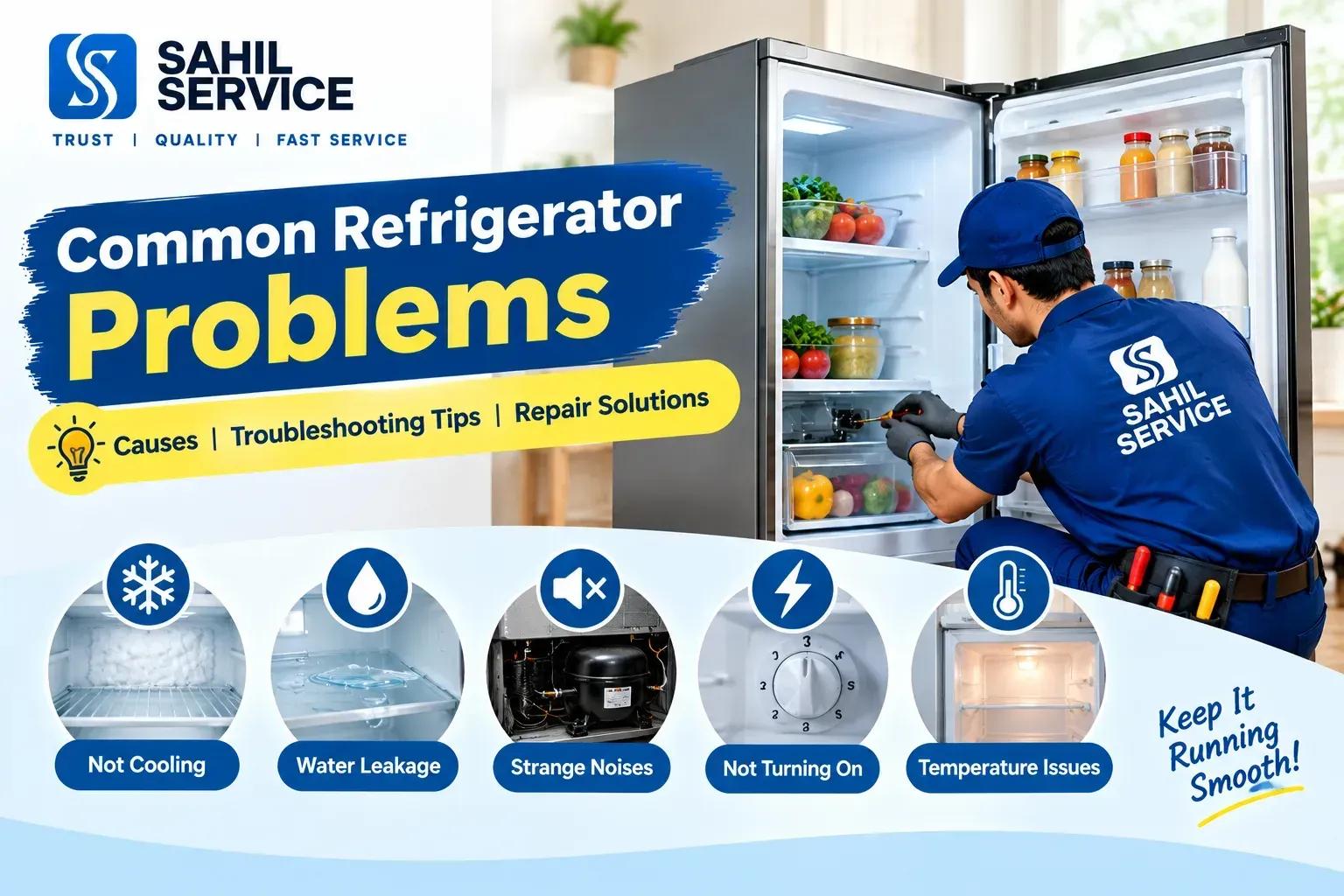
A refrigerator works quietly in the background until something goes wrong. Milk turns lukewarm, vegetables lose their freshness, water collects beneath the drawers, or an unfamiliar buzzing sound starts coming from the kitchen. These small warning signs can indicate anything from a blocked drain to a faulty thermostat or compressor.
If you're searching for refrigerator repair services, understanding the possible cause can help you decide what to check and when to call a professional. Sahil Service offers the best services for refrigerator repair, cooling problems, water leakage, compressor issues, and other common fridge faults.
Whether you need fridge repair at home, refrigerator servicing, or help diagnosing an appliance that has suddenly stopped working, the following guide explains the most common problems and their possible solutions.
Why Is My Refrigerator Not Cooling?
A refrigerator that is not cooling properly may have a problem with its temperature settings, condenser coils, evaporator fan, thermostat, or refrigerant system. The freezer may also stop maintaining the correct temperature if airflow is restricted or an internal component fails.
Start by checking the following:
- Temperature settings: Ensure the refrigerator has not accidentally been set to a warmer temperature.
- Door seal: Inspect the rubber gasket for gaps, cracks, or dirt that prevents the door from closing tightly.
- Air circulation: Avoid packing food tightly against the internal vents.
- Condenser coils: Dust and grease can restrict heat removal, particularly when coils are accessible and have not been cleaned for a long time.
- Ventilation: Make sure the refrigerator has adequate clearance around the areas specified by the manufacturer.
If the refrigerator remains warm after these checks, the issue may involve the cooling fan, thermostat, defrost system, compressor, or sealed refrigerant circuit.
Avoid repeatedly changing the temperature setting or attempting to open electrical components yourself. A qualified technician can diagnose the actual fault and recommend the appropriate repair.
For professional refrigerator repair at home, Sahil Service offers the best services to help identify cooling problems and restore normal refrigerator performance.
Why Is My Fridge Running but Not Cooling?
When your fridge continues running but fails to cool, it may be struggling to remove heat from the cabinet. This problem can occur even when the lights work and the motor appears to be operating normally.
Common causes include:
- Dirty condenser coils that restrict heat dissipation.
- A faulty evaporator fan that prevents cold air from circulating.
- A damaged door gasket allowing warm air to enter continuously.
- Ice buildup around the evaporator that blocks airflow.
- A failing compressor or an issue with the refrigerant circuit.
First, check whether the refrigerator and freezer are both warm or whether only one compartment is affected. If the freezer remains cold but the refrigerator section is warm, a blocked air passage or faulty evaporator fan may be responsible.
If both compartments are warm, the fault could be more extensive and may require professional diagnosis.
Searches for fridge not cooling but running, refrigerator cooling problem, and fridge repair near me often describe this situation. The right solution depends on the refrigerator model and the specific component that has failed.
Sahil Service offers the best services for diagnosing refrigerator cooling faults, inspecting internal components, and recommending suitable repair solutions.
Why Is My Refrigerator Not Starting?
A refrigerator that does not start may have an electrical supply problem, a damaged power cord, a faulty start relay, a defective control board, or a compressor that cannot start properly.
Before arranging a repair, perform a few basic checks:
- Confirm that the wall socket is supplying power.
- Check whether the refrigerator's plug is securely connected.
- Look for a tripped circuit breaker.
- Confirm that the temperature control has not been switched off.
- Listen for clicking sounds that may indicate a failed start component or another starting problem.
If the socket works but the refrigerator remains completely unresponsive, the issue could involve the internal electrical system. A repeated clicking noise, followed by silence, may indicate a problem with the start relay, overload protector, or compressor.
Do not remove electrical covers or repeatedly reset a breaker that keeps tripping. Unusual electrical behaviour should be investigated by a qualified technician.
Professional refrigerator repair services can help determine whether the appliance needs an electrical repair, a replacement start component, or further compressor testing.
For a fridge that will not turn on, Sahil Service offers the best services for refrigerator diagnosis and repair.
Why Is My Fridge Leaking Water Inside?
Water collecting inside the refrigerator, particularly beneath the vegetable drawers, commonly points to a blocked or frozen defrost drain.
During normal operation, frost melts during the automatic defrost cycle. The resulting water travels through a drain channel into an evaporation tray. If the drain becomes blocked by food particles, ice, or debris, water may accumulate inside the fridge instead.
Other possible causes include:
- A blocked defrost drain.
- Ice buildup around the drain opening.
- Incorrect refrigerator levelling.
- A damaged or poorly positioned drainage component.
- A water supply connection problem in refrigerators with dispensers or ice makers.
Remove any food sitting in the collected water and wipe the affected area dry. Check that food packaging is not obstructing the internal drainage opening.
Avoid pouring boiling water into the refrigerator or using sharp objects to remove ice. These actions can damage plastic components or internal tubing.
If water repeatedly returns after cleaning the accessible area, a technician can inspect the drainage system and identify the underlying cause.
For refrigerator water leakage repair, Sahil Service offers the best services to help resolve drainage problems and restore normal operation.
Why Is Water Leaking From the Bottom of My Refrigerator?
Water leaking from beneath a refrigerator may come from an overflowing drain pan, a blocked defrost drain, a damaged water line, or a poorly connected inlet hose.
The first step is to determine whether the appliance is connected to a water supply. Refrigerators with ice makers and water dispensers have additional hoses and fittings that can develop leaks.
Common causes include:
- Blocked defrost drain: Meltwater cannot reach the evaporation tray and spills into the refrigerator or onto the floor.
- Damaged water inlet line: A cracked or loose connection may allow water to escape.
- Overflowing drain pan: The collection tray may be displaced, damaged, or unable to evaporate water normally.
- Excessive condensation: Poor door sealing or frequent door opening can contribute to moisture buildup.
- Incorrect levelling: An improperly positioned refrigerator may not drain as intended.
If water is near an electrical socket or power cord, avoid touching wet electrical components. Isolate the appliance safely if you can do so without entering the wet area, and arrange professional assistance.
A refrigerator that leaks repeatedly should not be treated as a simple cleaning problem. The source of the water needs to be identified before the leak can be repaired properly.
Sahil Service offers the best services for fridge leakage repair, drain cleaning, and refrigerator maintenance.
Why Is My Refrigerator Making a Loud Noise?
Refrigerators produce some normal operating sounds, including gentle humming, occasional clicking, and brief changes in fan speed. However, a sudden increase in noise or persistent rattling may indicate a mechanical problem.
The type of sound can help narrow down the possible cause.
- Loud buzzing: May come from the compressor, a vibrating component, or a fan struggling to operate.
- Rattling: The refrigerator may be touching a wall, standing unevenly, or vibrating against loose objects.
- Grinding: Could indicate a worn fan motor or interference with a rotating fan blade.
- Repeated clicking: May be associated with the starting system, compressor, or temperature-control components.
- Gurgling: Refrigerant moving through the system can produce normal bubbling or gurgling sounds.
Start by checking whether the refrigerator is level and whether it is touching nearby cabinets or walls. Remove objects placed on top of the appliance that may be vibrating.
If the noise is new, unusually loud, or accompanied by poor cooling, avoid ignoring it. A damaged fan or compressor-related problem can affect the refrigerator's performance.
Professional refrigerator noise repair can help identify whether the sound is normal or whether a component needs adjustment or replacement.
Sahil Service offers the best services for refrigerator noise diagnosis, fan inspection, and mechanical repairs.
Why Is My Fridge Freezing Everything?
When food freezes inside the refrigerator compartment, the problem may involve an incorrect temperature setting, a faulty thermostat, a defective temperature sensor, or cold air entering the compartment unevenly.
This is particularly noticeable when milk, leafy vegetables, fruit, and other fresh foods freeze despite being stored in the refrigerator rather than the freezer.
Possible causes include:
- Temperature set too low: The refrigerator may be operating at an unnecessarily cold setting.
- Blocked air vents: Food positioned directly against cold-air outlets may freeze.
- Faulty thermostat or sensor: The system may continue cooling beyond the intended temperature.
- Damaged air damper: Some models use a damper to control cold air entering the refrigerator compartment.
- Control board fault: An electronic control problem can interfere with temperature regulation.
For many refrigerators, a fresh-food compartment temperature of approximately 3°C to 4°C is a practical target, while food safety guidance generally recommends keeping the refrigerator at or below 4°C. Follow your appliance manufacturer's instructions when adjusting the controls.
Move food away from the air outlets and check the temperature with a refrigerator thermometer rather than relying only on the dial setting.
If the compartment continues freezing food after the settings have been corrected, a professional inspection may be necessary.
For refrigerator temperature control repair, Sahil Service offers the best services to diagnose thermostat, sensor, and airflow problems.
Why Is My Refrigerator Cooling Slowly?
A refrigerator that takes too long to cool after being switched on, restocked, or moved may need additional time to reach its normal operating temperature. However, consistently slow cooling can indicate a maintenance or mechanical issue.
Common reasons include:
- Dust-covered condenser coils restricting heat removal.
- Poor ventilation around the appliance.
- Damaged door seals allowing warm air to enter.
- Excessive food loading that blocks airflow.
- A faulty evaporator fan or defrost system.
- A developing compressor or refrigerant-system fault.
After a power interruption or a large grocery shop, give the refrigerator time to stabilize and avoid opening the doors unnecessarily. Cooling performance depends on the appliance's capacity, room temperature, initial food temperature, and the amount of food inside.
If the refrigerator regularly struggles to maintain its set temperature, check the door seal and ventilation first. Persistent slow cooling deserves a proper inspection.
Do not assume that adding refrigerant is the solution. Refrigerant should only be checked and serviced by a qualified professional when testing identifies a sealed-system problem.
Sahil Service offers the best services for slow refrigerator cooling repair, maintenance, and cooling-system diagnosis.
Why Is My Fridge Compressor Running Continuously?
A refrigerator compressor may run for extended periods during hot weather, after the door has been opened frequently, or when warm food has recently been placed inside. Modern inverter refrigerators can also operate at low speeds for long periods as they maintain a stable temperature.
Continuous operation becomes more concerning when the refrigerator cannot reach its target temperature or the compressor seems to run without a meaningful cooling cycle.
Potential causes include:
- Dirty condenser coils.
- Damaged door gaskets.
- Poor ventilation around the refrigerator.
- A defective thermostat or temperature sensor.
- A malfunctioning defrost system.
- A compressor or refrigerant-circuit fault.
Check whether the refrigerator is maintaining the correct temperature and whether the doors close properly. Make sure the ventilation clearances match the manufacturer's recommendations.
If the compressor runs continuously and the refrigerator remains warm, professional testing can determine whether the problem involves heat dissipation, temperature sensing, airflow, or the sealed cooling system.
Avoid repeatedly switching the appliance on and off in an attempt to stop the compressor. This will not correct the underlying fault and can interfere with normal operation.
For refrigerator compressor repair, Sahil Service offers the best services for diagnosing continuous running, poor cooling, and related mechanical problems.
Why Does My Refrigerator Keep Switching Off?
A refrigerator that repeatedly switches off and restarts may be experiencing a power supply problem, overheating, a faulty start relay, an electrical connection issue, or a compressor-related fault.
The symptoms matter. A brief pause in compressor operation may be completely normal because the thermostat or electronic controls have reached the desired temperature. A refrigerator that loses power completely or repeatedly clicks and attempts to restart requires closer attention.
Possible causes include:
- Loose or unreliable electrical connections.
- An unstable power supply.
- A faulty compressor start relay or overload protector.
- Overheating caused by restricted ventilation or excessive dust.
- A defective thermostat, sensor, or control board.
- A failing compressor.
Check whether the display and interior light also switch off. If everything loses power, the supply or electrical controls may be involved. If the lights stay on but the compressor repeatedly stops, the starting system, controls, or compressor may need inspection.
If the breaker trips repeatedly, unplugging and resetting the appliance over and over is not a safe solution. Stop using the refrigerator and arrange qualified electrical or appliance repair.
Sahil Service offers the best services for refrigerator power problems, compressor diagnosis, and professional fridge repair.
Refrigerator Repair and Service at Home
Refrigerator problems can disrupt your daily routine, spoil food, and increase electricity consumption when the appliance struggles to maintain its temperature. Timely diagnosis helps prevent a minor fault from becoming a more expensive repair.
Sahil Service offers the best services for common refrigerator problems, including:
- Refrigerator not cooling or cooling slowly.
- Fridge water leakage and blocked drain problems.
- Refrigerator making loud or unusual noises.
- Thermostat and temperature sensor faults.
- Fan motor and airflow problems.
- Compressor starting and running issues.
- Electrical faults and repeated shutdowns.
- General refrigerator servicing and maintenance.
Whether you need refrigerator repair at home, fridge cooling repair, or help identifying an unusual noise, a qualified technician can inspect the appliance and recommend a suitable solution.
Before booking, note your refrigerator's brand and model, whether it is a single-door, double-door, side-by-side, or inverter model, and the symptoms you have noticed. Mentioning when the problem started can also help the technician prepare for the visit.
How Can You Prevent Common Refrigerator Problems?
A few simple habits can help maintain refrigerator performance and reduce unnecessary wear.
Keep the condenser area clean. Dust can restrict heat removal. Clean accessible areas according to the manufacturer's instructions, and disconnect power when required for safe cleaning.
Check the door seals. Wipe away dirt and inspect the rubber gasket for cracks or gaps that allow warm air to enter.
Avoid blocking air vents. Leave room for cold air to circulate around stored food.
Maintain suitable temperature settings. Keep the refrigerator at a food-safe temperature and follow the manufacturer's recommendations.
Allow proper ventilation. Keep the recommended clearance around the refrigerator to help heat escape.
Arrange servicing when performance changes. Persistent water leakage, unusual noises, repeated shutdowns, or poor cooling should be investigated instead of ignored.
A refrigerator often gives small warnings before a complete breakdown. Recognizing those signs early can help you protect your food, control electricity costs, and extend the useful life of your appliance.
Why Choose Sahil Service for Refrigerator Repair?
When your refrigerator stops cooling or starts leaking, you need a clear diagnosis and a practical repair solution.
Sahil Service offers the best services for refrigerator repair and maintenance, helping customers address common cooling, drainage, electrical, and mechanical problems.
Reasons to consider professional refrigerator servicing include:
- Convenient home service: Get your refrigerator inspected at home without transporting the appliance.
- Problem-focused diagnosis: Identify the likely source of cooling, leakage, noise, or power issues.
- Suitable repair recommendations: Determine whether cleaning, adjustment, component replacement, or further testing is necessary.
- Preventive maintenance: Identify wear and maintenance concerns before they lead to more serious failures.
- Clear communication: Understand the problem and expected repair costs before approving additional work.
If your refrigerator is not cooling, keeps switching off, or is leaking water onto the kitchen floor, arrange a professional inspection rather than guessing which component needs replacement.
Frequently Asked Questions About Refrigerator Repair
Why is my refrigerator running but not cooling?
Possible causes include dirty condenser coils, a faulty fan, blocked airflow, a damaged door seal, or a compressor or refrigerant-system problem. A technician can identify the exact cause.
How much does refrigerator repair cost?
The cost depends on the fault, refrigerator model, spare parts, and labour. Minor repairs generally differ in cost from compressor or sealed-system work. Request an inspection and estimate before approving repairs.
Is it worth repairing an old refrigerator?
It depends on the appliance's age, condition, energy efficiency, repair cost, and availability of replacement parts. Compare the estimated repair cost with the cost and expected efficiency of a replacement.
Why is my refrigerator leaking water every day?
A blocked defrost drain, damaged water line, displaced drain pan, or condensation problem may cause recurring leaks. The source must be identified to prevent the water from returning.
When should I call a refrigerator repair technician?
Arrange professional assistance when the refrigerator cannot maintain a safe temperature, repeatedly shuts down, makes unusually loud noises, leaks persistently, or shows electrical warning signs.
Book Refrigerator Repair with Sahil Service
A refrigerator should keep food fresh without constant noise, repeated shutdowns, or water collecting on the kitchen floor. If yours is showing any of these symptoms, identifying the cause early can help you avoid unnecessary food waste and further appliance damage.
Sahil Service offers the best services for refrigerator repair, cooling problems, leakage issues, electrical faults, and maintenance.
Contact Sahil Service to arrange a refrigerator inspection and get a suitable repair recommendation for your appliance.