11 Common Geyser Problems: Causes, Solutions, and When to Call a Repair Technician
Discover 11 common geyser problems, their causes and solutions. Get professional geyser repair, servicing and installation from Sahil Service in Delhi NCR
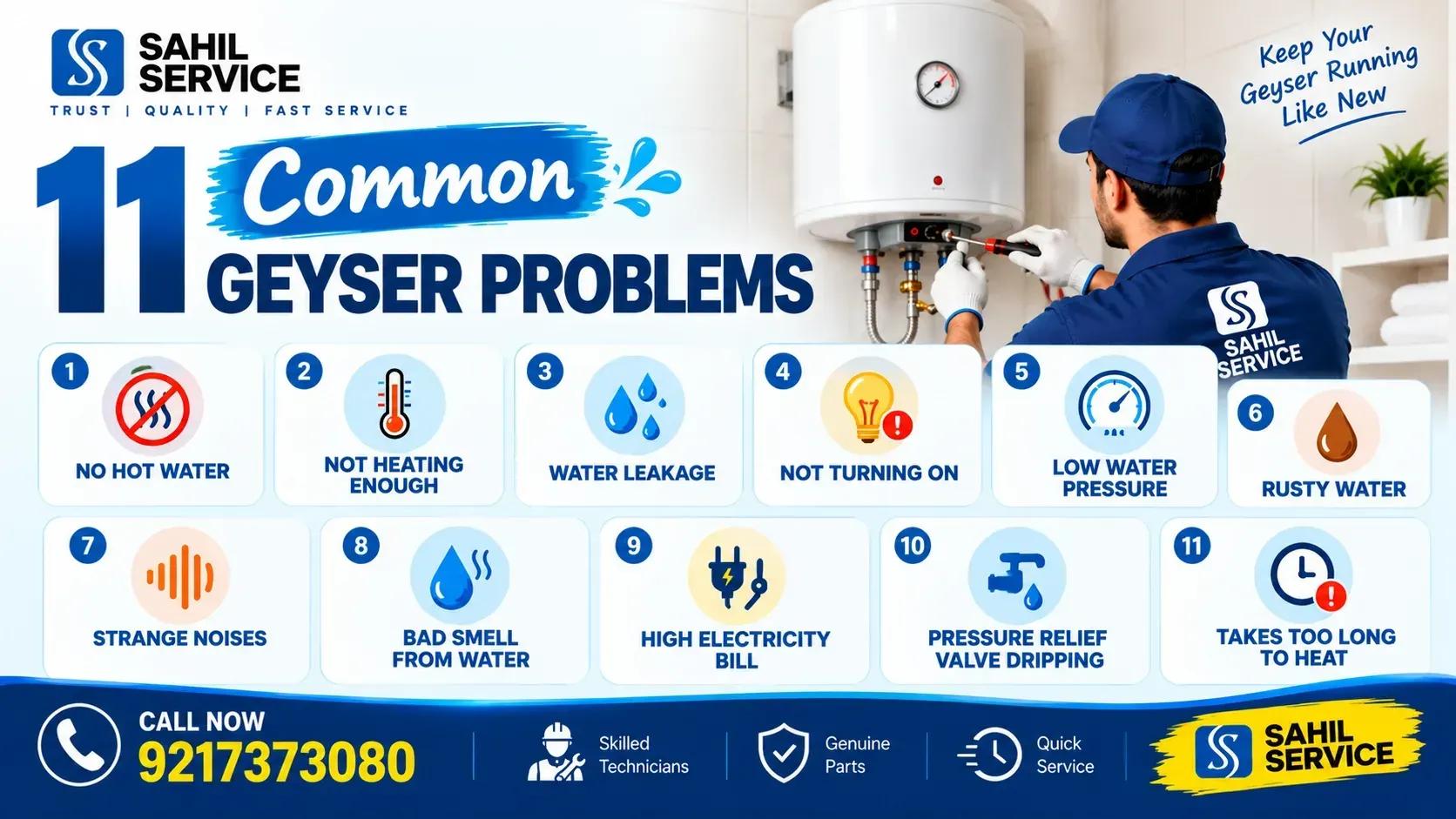
A geyser is one of those household appliances you rarely think about until something goes wrong. One morning, you hear a strange popping sound from the bathroom. Another day, the water takes twice as long to heat, or you notice a little rust-coloured water coming from the tap. These signs may seem minor, but they can point to problems that need attention.
In Delhi NCR, where hot water becomes especially important during winter, a faulty geyser can quickly disrupt your daily routine. Understanding the cause of a problem helps you decide whether a simple check is enough or whether you need professional assistance.
Sahil Service provides geyser repair, installation, servicing, and maintenance solutions for households across Delhi NCR, subject to service availability in your area. From heating problems and faulty thermostats to leakage and electrical faults, professional inspection can help identify the issue and determine the right repair.
Let's look at 11 common geyser problems, why they happen, and what you should do about them.
1. Why Is My Geyser Making a Popping Sound?
A popping sound from a geyser can be unsettling, particularly when the bathroom is otherwise quiet. You might hear a series of small pops, crackling noises, or sounds similar to water bubbling inside a kettle.
One common cause is mineral buildup inside the tank. When hard water is heated, minerals can settle around the heating element or at the bottom of the storage tank. Water trapped beneath these deposits can produce popping or rumbling sounds as it heats.
Other possible causes include sediment accumulation, a heating element affected by scale, or pressure-related problems.
What should you do?
- Pay attention to whether the sound occurs only during heating.
- Check whether the geyser is also taking longer to heat water.
- Arrange professional inspection if the noise becomes loud, persistent, or is accompanied by leakage.
- Avoid opening the tank or attempting to remove internal scale yourself.
Periodic maintenance and descaling, where appropriate for the model, can help reduce mineral buildup.
Sahil Service offers geyser servicing and repair to help homeowners identify unusual noises and determine whether cleaning, component replacement, or another repair is necessary.
2. Why Does My Geyser Smell Like Burning Plastic?
A burning-plastic smell coming from a geyser should never be ignored. Unlike ordinary heating noises, this smell may indicate an electrical problem that requires immediate attention.
Possible causes include overheated wiring, a loose electrical connection, damaged insulation, a failing switch, or a component becoming excessively hot.
In some cases, the smell may come from a nearby electrical accessory rather than the geyser itself. However, you shouldn't assume that the problem is harmless.
What should you do?
- Stop using the geyser immediately.
- If you can safely isolate its power supply without touching wet or damaged equipment, switch it off at the appropriate isolator or breaker.
- Keep the appliance out of use until it has been inspected.
- Contact a qualified technician to identify the source of the smell.
Do not remove the geyser cover, touch exposed wiring, or repeatedly reset a tripping breaker.
Sahil Service provides appliance repair services, including electric geyser fault diagnosis. Professional inspection can help determine whether the issue involves wiring, a switch, a heating component, or another electrical part.
3. Why Is My Geyser Producing Rusty Water?
If the water from your geyser appears reddish, brown, or rusty, the first step is to determine where the discolouration is coming from.
Rust-coloured water may indicate corrosion inside an ageing storage tank, deterioration of internal protective components, or corrosion in the connected plumbing. Sometimes, the problem originates in the building's water supply rather than the geyser itself.
A corroded tank deserves particular attention because internal deterioration can eventually lead to leakage.
Possible reasons for rusty water include:
- Corrosion inside the geyser tank
- Deterioration of the sacrificial anode rod
- Rusting pipes or plumbing fittings
- Sediment or deposits accumulating inside the tank
- Discolouration originating from the incoming water supply
What should you do?
If possible, compare the water from other taps to see whether the problem is limited to the hot-water supply. Avoid using discoloured water for drinking or cooking until its source is understood.
If the discolouration persists, arrange a professional inspection. A technician can assess the tank, plumbing connections, and relevant internal components.
Sahil Service offers geyser maintenance and repair services to help identify whether rusty water is associated with the appliance or connected plumbing. If the storage tank itself is badly corroded, replacing the geyser may be more practical than attempting a repair.
4. Why Is My Geyser Water Not Getting Hot Enough?
You turn on the shower expecting comfortably warm water, but it remains lukewarm. Or perhaps the water gets hot initially and becomes cold much sooner than it used to.
This problem can have several causes, and the correct solution depends on how the geyser is behaving.
A faulty thermostat may prevent the water from reaching the intended temperature. A worn heating element may reduce heating performance, while mineral deposits can interfere with heat transfer. In other cases, the thermostat setting may be too low or the hot-water demand may exceed the geyser's capacity.
Common causes include:
- A malfunctioning thermostat
- A damaged or scaled heating element
- Incorrect temperature settings
- Heavy mineral buildup
- A geyser capacity that is too small for household demand
- Excessive hot-water consumption before the tank has reheated
What should you do?
Check the temperature setting according to the manufacturer's instructions. If the water remains insufficiently hot, takes unusually long to heat, or becomes cold much faster than before, arrange an inspection.
Don't attempt to access internal electrical components yourself.
Sahil Service offers geyser repair and servicing to help diagnose heating problems and determine whether the thermostat, heating element, or another component needs attention.
5. Why Does My Geyser Trip the Circuit Breaker?
A geyser that repeatedly trips the MCB or circuit breaker may have an electrical fault. The breaker is an important safety device, and repeated tripping should not be treated as a minor inconvenience.
Possible causes include a short circuit, damaged wiring, an insulation fault in the heating element, moisture entering electrical components, or a problem with the circuit's electrical protection.
An overloaded or incorrectly configured electrical circuit may also contribute to the issue.
What should you do?
- Stop using the geyser.
- Do not repeatedly reset the breaker to keep the appliance running.
- Avoid touching the switch or appliance if there is moisture or suspected electrical damage.
- Arrange an inspection by a qualified electrician or appliance technician.
The cause should be identified before the geyser is used again. Simply replacing the breaker without investigating the underlying fault may leave the hazard unresolved.
Sahil Service provides appliance repair assistance for geyser problems. A professional inspection can help determine whether the issue lies in the heating element, electrical connections, or another component.
6. Why Is My Geyser Overheating the Water?
Water that becomes unexpectedly hot can indicate a temperature-control problem. If the water is much hotter than the selected setting, or the geyser continues heating abnormally, the issue should be checked promptly.
A faulty thermostat may fail to regulate the temperature correctly. A temperature sensor or control component may also malfunction, depending on the type of geyser.
Excessive heating can increase the risk of scalding and may place unnecessary stress on the appliance.
Possible causes include:
- A faulty thermostat
- A malfunctioning temperature sensor
- A defective control system
- Incorrect temperature settings
- A related safety-control fault
What should you do?
Stop using the geyser if the water is dangerously hot or the appliance appears to be overheating. Isolate the power supply only if it is safe to do so, and arrange a professional inspection.
Never attempt to bypass the thermostat or any safety device.
Sahil Service offers geyser repair and maintenance services to help identify temperature-control problems and determine the appropriate corrective action.
7. Why Is My Geyser Not Working After a Power Cut?
A power cut can interrupt the geyser's normal operation, but a properly functioning appliance should generally resume working once the electricity supply returns.
If your geyser remains off after a power cut, the problem may involve the electrical supply, a tripped breaker, a faulty switch, or an internal electrical component. Some models may also require their controls to be checked according to the manufacturer's instructions.
Try these basic checks:
- Confirm whether electricity has returned to the rest of the house.
- Check whether the geyser's dedicated switch appears to be in the normal position.
- Look for visible warning indicators, if your model has them.
- If the breaker has tripped, don't repeatedly reset it. Arrange an inspection if the problem persists.
If you notice a burning smell, unusual heat around the switch, damaged wiring, or signs of water leakage, leave the appliance switched off and seek professional help.
Sahil Service provides geyser repair and fault-diagnosis services for households across Delhi NCR, subject to local availability. A technician can help establish whether the fault is related to the power supply or the appliance itself.
8. Why Does My Geyser Keep Switching On and Off?
A geyser may switch on and off during normal operation as its thermostat regulates water temperature. However, frequent cycling, sudden shutdowns, or repeated interruptions in heating can indicate a problem.
A thermostat that isn't working correctly may cause irregular heating. Loose electrical connections, overheating protection, or inconsistent power supply may also interrupt operation.
In some cases, a storage geyser may simply be reaching its set temperature and switching off as designed. The important distinction is whether the behaviour is normal for that model or represents a change in performance.
Signs that the geyser needs inspection include:
- Repeated switching before the water becomes hot
- Frequent shutdowns accompanied by an error indicator
- Water temperature fluctuating unexpectedly
- Breakers tripping during operation
- Unusual sounds or a burning smell
If the appliance is repeatedly shutting down or showing signs of an electrical fault, stop using it until it has been inspected.
Sahil Service offers geyser servicing and repair to help identify problems involving thermostats, heating components, electrical connections, and other relevant parts.
9. Why Is My Geyser Taking Too Much Time to Heat?
Waiting for hot water is frustrating, especially on a cold Delhi NCR morning when every extra minute seems to matter.
A geyser that takes longer than usual to heat may have a scaled heating element, a failing thermostat, a reduced heating capacity, or an electrical supply issue. Cold incoming water and changes in water consumption can also affect how long heating takes.
For example, if several family members use hot water one after another, a storage geyser may need additional time to reheat the tank. That's normal to an extent. A sudden, significant increase in heating time, however, deserves attention.
Common reasons include:
- Mineral deposits around the heating element
- A partially failing heating element
- Thermostat or temperature-control problems
- A larger hot-water demand than the geyser can accommodate
- Changes in the incoming water temperature
How can you address the problem?
Check whether the geyser's temperature setting and capacity suit your needs. If heating performance has deteriorated, arrange a professional inspection rather than immediately purchasing a replacement.
Sahil Service provides geyser maintenance and repair services, including assistance with slow-heating problems. A technician can assess the appliance and recommend cleaning, component repair, or replacement where appropriate.
10. Why Is My Geyser Leaking From the Pressure Valve?
A small amount of water may occasionally discharge from a pressure-relief valve under certain operating conditions. However, continuous dripping, a steady stream, or an unexplained increase in leakage needs attention.
The pressure-relief valve is a safety component designed to release excess pressure under specified conditions. Leakage may occur because of excessive pressure, thermal expansion, a faulty valve, sediment preventing proper closure, or an issue with the plumbing arrangement.
The correct diagnosis depends on the geyser's design and installation.
What should you do?
- Check whether the discharge is occasional or continuous, without touching hot water or the valve.
- Keep clear of hot-water discharge.
- Never block, cap, or disable the pressure-relief outlet.
- If the leakage is persistent or accompanied by abnormal noise or excessive heating, stop using the appliance and arrange a professional inspection.
A technician can inspect the valve, installation, and operating conditions to identify the cause.
Sahil Service offers geyser repair and servicing to help homeowners address valve leakage and related plumbing issues. If the storage tank itself is leaking, the appliance may require replacement rather than a valve repair.
11. Why Is My Geyser Making a Loud Humming Noise?
A gentle operating sound may be normal for some appliances, but a loud or newly developed humming noise can indicate a problem worth investigating.
The source may be vibration from the mounting brackets, a loose external component, a humming electrical component, or mineral buildup affecting the heating process. The sound alone isn't enough to identify the exact fault.
Pay attention to when it occurs. Does the humming start as soon as the geyser is switched on? Does it happen only during heating? Is it accompanied by a burning smell, leakage, or repeated circuit breaker trips?
These details can help a technician narrow down the possible causes.
What should you do?
- Avoid opening the appliance to investigate the noise.
- Check for obvious external vibration only when the appliance is safely switched off.
- Stop using the geyser if the humming is accompanied by electrical warning signs, unusual heat, or leakage.
- Arrange a professional inspection if the sound is persistent or getting louder.
Sahil Service offers geyser inspection, servicing, and repair to help identify unusual operating noises and recommend an appropriate solution.
How to Prevent Common Geyser Problems
Many geyser faults become easier to manage when the appliance receives appropriate maintenance. While no maintenance routine can prevent every breakdown, a few sensible habits can help you spot warning signs early.
Schedule periodic inspections
Follow the manufacturer's maintenance recommendations and arrange an inspection if you notice reduced heating performance, leakage, or unusual sounds.
Pay attention to hard-water deposits
Mineral buildup can affect heating performance. Ask a technician whether descaling is appropriate for your geyser and local water conditions.
Keep electrical components dry
Water and electricity are a dangerous combination. Report leakage around switches, wiring, or electrical connections rather than attempting to repair them yourself.
Avoid ignoring small leaks
A minor leak can become a larger problem if its source isn't identified. Prompt inspection helps establish whether the cause is a connection, valve, or damaged tank.
Use the recommended temperature settings
Follow the manufacturer's instructions and avoid unnecessary temperature adjustments. Proper temperature control helps reduce scalding risks and unnecessary heating.
Get unusual sounds checked
Popping, humming, or rumbling sounds may have several causes. If a noise is new, persistent, or unusually loud, arrange an inspection rather than assuming it's normal.
Why Choose Sahil Service for Geyser Repair in Delhi NCR?
When a geyser stops working, you need more than a temporary fix. You need to understand what's wrong, what the repair involves, and whether the appliance can be used safely afterwards.
Sahil Service offers geyser repair, installation, servicing, and maintenance solutions for homes across Delhi NCR, subject to service coverage in your locality.
Customers can seek assistance with common issues such as:
- Geysers that fail to heat water properly
- Faulty heating elements and thermostats
- Water leakage and valve problems
- Unusual operating noises
- Electrical faults requiring professional diagnosis
- Geyser installation, uninstallation, and maintenance
The team also provides repair and maintenance services for other household appliances, including:
Refrigerators: Cooling problems, water leakage, and other common faults.
Washing machines: Drainage problems, spinning issues, and machines that won't start.
Microwave ovens: Heating faults and other appliance problems requiring professional inspection.
Air conditioners: Cooling issues, servicing, installation, and maintenance.
RO water purifiers: Filtration, water-flow, and leakage problems.
Having access to several appliance services through one provider can make household maintenance more convenient. Before booking, confirm the service coverage, appointment availability, inspection charges, and applicable warranty terms.
Frequently Asked Questions About Geyser Problems
Why is my geyser making strange noises?
Popping or rumbling may result from mineral deposits or sediment, while humming may involve vibration or an electrical component. Persistent or loud noises should be professionally inspected.
Can a faulty geyser increase my electricity bill?
Yes. A scaled heating element, a malfunctioning thermostat, or other heating inefficiencies may contribute to increased energy consumption. The actual cause should be diagnosed before replacing parts.
Is rusty water from a geyser dangerous?
Rust-coloured water can indicate corrosion or a plumbing issue. Avoid using visibly discoloured water for drinking or cooking until the source is established, and arrange an inspection if the problem persists.
Why does my geyser keep tripping the MCB?
Possible causes include a short circuit, damaged wiring, a faulty heating element, moisture ingress, or an electrical circuit problem. Stop using the appliance and have the fault checked rather than repeatedly resetting the breaker.
How often should a geyser be serviced?
The appropriate schedule depends on the manufacturer's recommendations, water hardness, appliance type, and usage. Regular inspections can help identify developing problems.
Can I repair a geyser myself?
Basic external observations may help you describe the problem, but internal electrical, pressure, and heating components should be handled by a qualified professional. Never open an energised geyser or bypass its safety controls.
Does Sahil Service provide geyser repair at home?
Sahil Service offers geyser repair and maintenance services across its Delhi NCR service network. Contact the team to confirm coverage in your locality, available appointments, and applicable charges.
Book Professional Geyser Repair Service with Sahil Service
A strange sound, a sudden drop in water temperature, or a small leak can be your geyser's way of signalling that something needs attention. Acting early may help prevent further damage and make it easier to identify the right repair.
Sahil Service provides geyser repair, servicing, installation, and maintenance solutions across Delhi NCR, along with refrigerator, washing machine, microwave, AC, RO purifier, and other appliance repair services.
If your geyser isn't working as it should, visit the Sahil Service geyser repair page to explore the available services and arrange an appointment.
Get the problem inspected, understand the repair options, and restore your hot-water routine with professional help from Sahil Service.